Key takeaways
- Hamilton Hills is the budget benchmark at $129.99 for its 24 by 32 inch backlit rectangle, sold mainly through Amazon.
- Krugg is the value pick because its Sol and Icon lines include a dimmer and defogger standard from about $400.
- Adjustable color temperature is the feature most worth paying for, with warm 2700K to 3000K light and neutral 5000K daylight for makeup.
- Low-iron glass cuts iron oxide to about 0.01 percent, removing the green tint that skews skin tones at the mirror edge.
- A vanity mirror needs a UL damp rating at minimum, and plug-in models require GFCI-protected outlets under the NEC.
The best backlit bathroom mirror for most renovations is the Kohler Verdera, a known quantity from a brand every LA contractor has installed. Budget buyers should start with Hamilton Hills, about $130 on Amazon. The value sweet spot is Krugg, which ships a dimmer and defogger standard at mid-market prices. For designer projects, Electric Mirror and Seura own the hospitality-grade tier, and Claris is the trade pick for embedded-LED glass. The framework behind those calls follows.
The quick picks
Seven brands cover every budget, from a weekend Amazon order to a spec sheet in a designer’s binder.
- Best for most bathrooms: Kohler Verdera, 24 to 40 inches wide, from roughly $1,000 to $1,600 at retail.
- Best budget buy: Hamilton Hills 24 by 32 inch backlit mirror, $129.99 at this writing.
- Best value with features: Krugg Sol or Icon, defogger and dimmer included, from about $400.
- Best retail crossover: West Elm Lawrence, adjustable color temperature, $449 to $999.
- Best custom order: Seura, made to measure in Wisconsin, quote-based pricing.
- Best hospitality pedigree: Electric Mirror Silhouette or Eternity, from about $2,100.
- Best trade-program glass: Claris, embedded LED in low-iron glass, premium pricing.
| Brand | Tier | Named line | Price checked June 2026 |
|---|---|---|---|
| Hamilton Hills | Budget | Frameless backlit series | $129.99 for 24″ x 32″ |
| West Elm | Mid | Lawrence LED | $449 to $999 |
| Krugg | Mid | Sol, Icon | About $400 to $1,600 |
| Kohler | Upper mid | Verdera | About $1,000 to $1,600 |
| Electric Mirror | Premium | Silhouette, Eternity | From about $2,100 |
| Seura | Premium | Allegro, Forte | Custom quote |
| Claris | Premium | Backlit LED collections | Trade pricing via account |
What separates a good backlit mirror from a cheap one
Light placement, output, color control, and glass quality decide whether a backlit mirror earns its wall, and the spec sheet tells you most of it before you buy. The rest is safety certification, which matters more in a bathroom than anywhere else in the house.
Light placement: backlit, front-lit, or edge-embedded
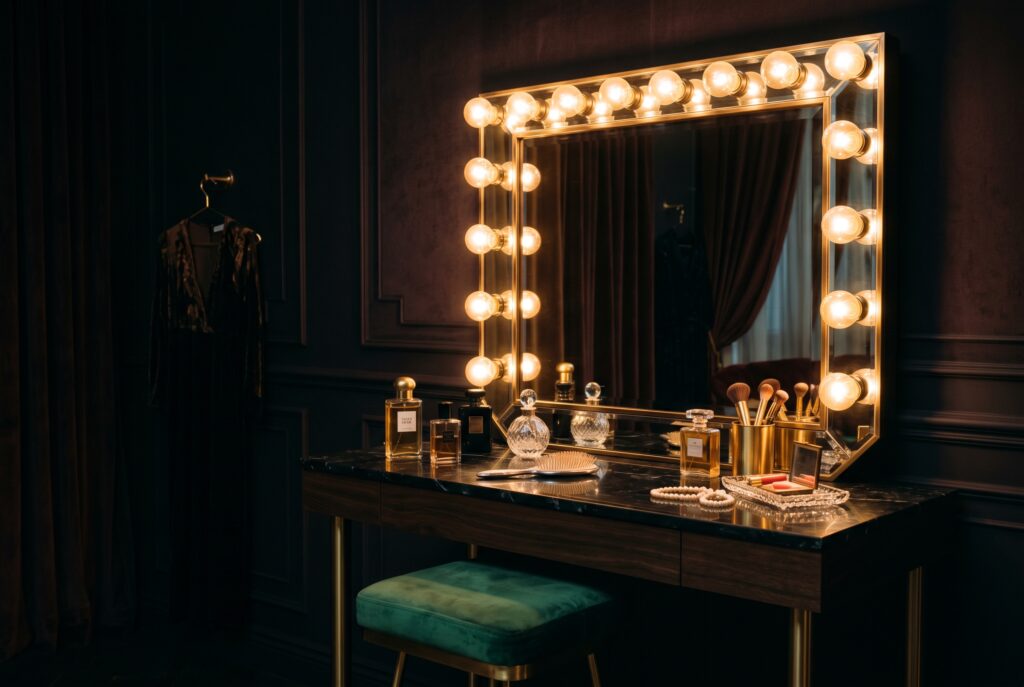
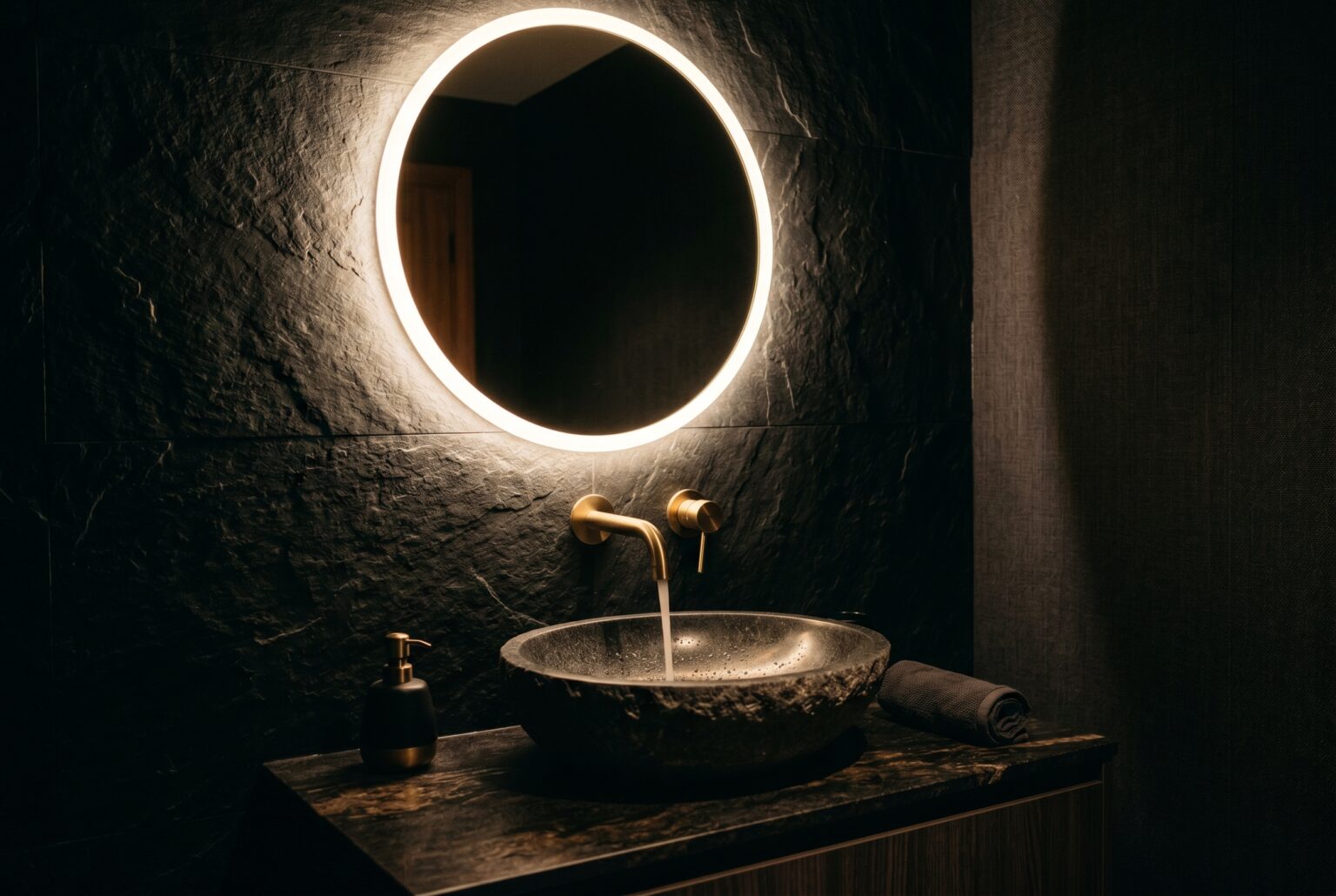
A true backlit mirror hides its LEDs behind the glass, throwing a halo onto the wall so the mirror appears to float. It is the most flattering ambient effect and the least useful for close grooming, since the light wraps around you rather than hitting your face. Front-lit mirrors push light forward through frosted bands, which is better for makeup and shaving. Edge-embedded designs seat the diodes inside the glass itself for an even, shadowless field. Many of the best mirrors combine backlight and frontlight. If task lighting is the priority, our hollywood mirror versus backlit mirror guide walks the trade-off in detail.
Lumen output and dimming
Look for published lumens, and treat silence as a warning. As a benchmark, Hamilton Hills lists 1,040 lumens on its 24 by 32 inch model and 2,412 lumens on the 30 by 40, numbers you can actually compare. Anything north of 1,500 lumens handles a full vanity wall. Dimming is non-negotiable: a backlit mirror doubles as a nightlight and as evening ambience, and a single brightness setting wastes both jobs. Touch-sensor dimmers on the glass are standard now; wall-dimmer compatibility is worth confirming on hardwired models.
Color temperature adjustability
Adjustable color temperature is the single feature most worth paying for. Warm light around 2700K to 3000K flatters the room; neutral daylight around 5000K is the honest setting for makeup and skincare. A mirror locked at one temperature forces a guess every morning. Seura builds its Allegro and Forte lines at 3000K with 90-plus CRI for accurate color rendering. West Elm’s Lawrence line and Kohler’s Verdera offer tunable settings, and the premium brands treat tunability as standard.
Glass quality and the green tint problem
Standard mirror glass contains iron oxide, which reads as a faint green cast that skews skin tones, and the tint is strongest right where a backlit halo grazes the edge. Low-iron glass cuts the iron to roughly one tenth of standard float glass, about 0.01 percent, removing the green and raising light transmission, per glass manufacturer Vitro. The field test is simple: a green edge means standard glass, a clear edge means low-iron. Budget mirrors almost never specify; premium mirrors almost always do.
Anti-fog and damp ratings
A heated anti-fog pad behind the glass keeps a shave possible after a hot shower, and it is the feature owners say they would not give up. Krugg includes a defogger standard on the Sol and Icon lines, a notable inclusion at its price. Just as important is the safety listing. UL rates fixtures for dry, damp, and wet locations: damp-rated fixtures handle humidity and condensation but not direct spray, while wet-rated fixtures are sealed against water contact. A vanity mirror in a ventilated bathroom needs a damp rating at minimum. Confirm it on the listing before checkout.
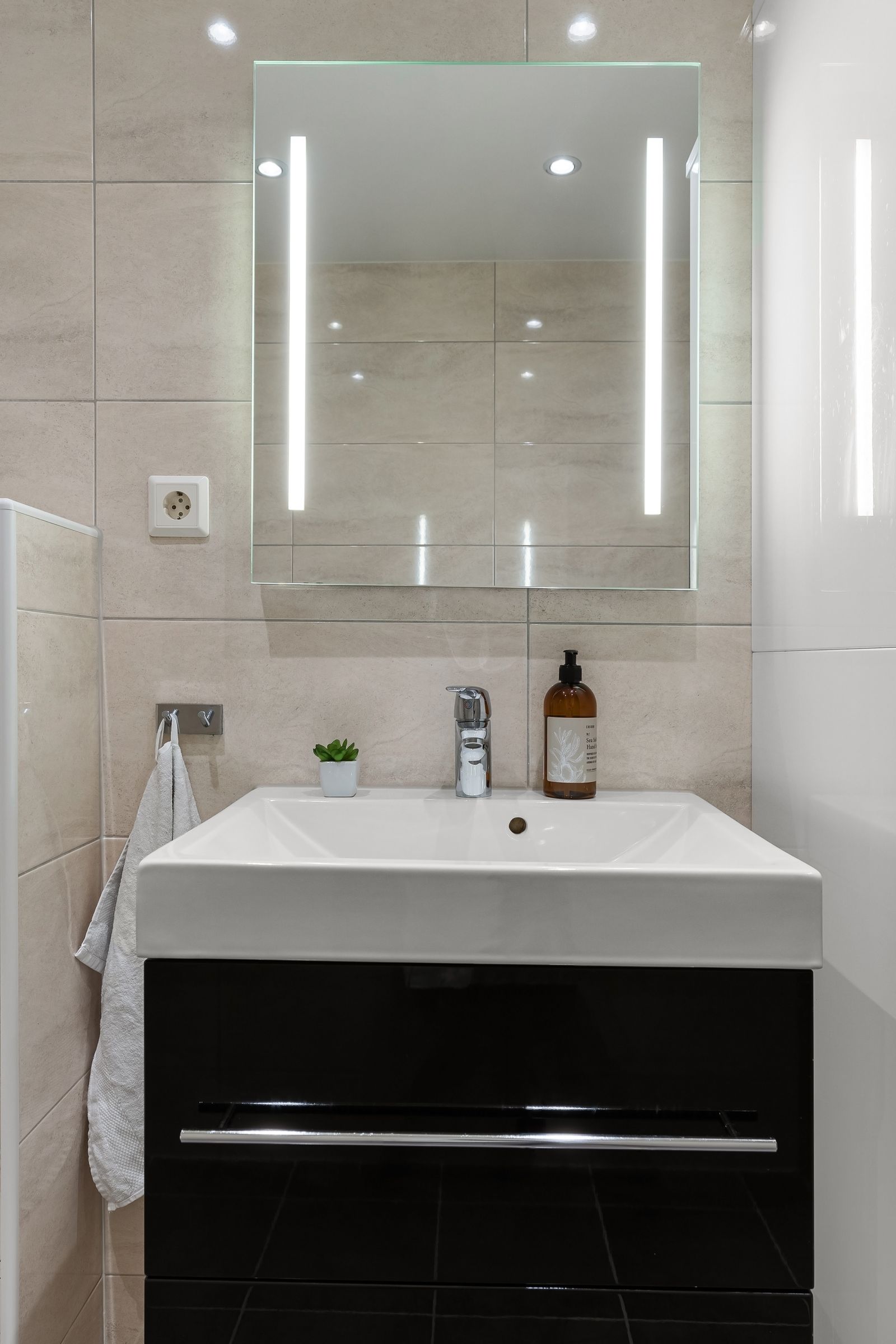
The roundup: seven brands worth your wall
Every brand here was selling backlit mirrors as of June 2026, with at least one named product line and pricing confirmed where the maker publishes it.
Hamilton Hills
Hamilton Hills is the budget benchmark, sold mainly through Amazon, with the 24 by 32 inch backlit rectangle at $129.99 at this writing. The brand publishes real specs, including 3000K color temperature and per-model lumen counts, which most budget sellers skip. Pros: honest pricing, published output, frameless looks that read more expensive than they are. Cons: fixed color temperature on most models, standard glass rather than low-iron, and plug-in power that leaves a cord to manage unless your electrician adds an outlet behind the glass.
West Elm Lawrence
The Lawrence Adjustable Color Temperature LED Mirror, $449 to $999 depending on size, is the strongest backlit offering from a mainstream furniture retailer. It is hardwired, framed in aluminum, and switches color temperature by touch sensor. Pros: tunable light at a mid-market price, showroom-visible before you buy, finishes that match West Elm vanities. Cons: hardwiring means an electrician on install day, the spec sheet is thinner than the dedicated mirror brands publish, and there is no anti-fog option.
Krugg
Krugg Reflections is the value play of the dedicated mirror makers. The round Sol runs about $400 to $725 by size, the rectangular Icon starts near $500, and a 60 by 30 inch Icon for a double vanity is $1,600. Dimmer and defogger come standard. Pros: the feature set premium brands charge extra for, wide size range up to wall-length pieces, hardwired with clean installs. Cons: styling is functional rather than distinctive, and the brand has little showroom presence, so you are buying from photos.
Kohler Verdera
The Verdera lighted mirror line runs 24, 34, and 40 inches wide, with the 40 inch model listed around $1,599 at plumbing retailers. A Verdera Voice version adds Amazon Alexa. Pros: national parts and warranty support, contractor familiarity that smooths a renovation, consistent light quality, and a matching medicine-cabinet family. Cons: you pay a brand premium over Krugg for similar specs, the design is conservative, and the voice-control model adds cost most bathrooms will never use.
Electric Mirror
Washington-based Electric Mirror built its name lighting hotel bathrooms, and the residential line carries that durability brief. The backlit Silhouette starts around $2,135 at retail and the rounded Eternity around $2,080. Pros: hospitality-grade build, a floating halo effect the cheaper brands only approximate, many sizes and shapes. Cons: the price is roughly four Kruggs, lead times run longer than stock retail, and most buyers will need a showroom or trade partner to see one lit before committing.
Seura
Seura builds lighted mirrors to order in Wisconsin, with the Allegro and Forte lines at 3000K and 90-plus CRI. Pricing is quote-based for custom work, though stock 24 by 36 inch versions sell through Amazon. Pros: true made-to-measure sizing for awkward walls, documented color accuracy, and US manufacturing with design support. Cons: quote-based pricing slows comparison shopping, stock sizes are limited, and the custom lead time does not suit a renovation already behind schedule.
Claris
Claris is a European manufacturer working in Belgian low-iron glass, and it sits at the premium end of this list. Its LEDs are embedded in the glass rather than mounted as exposed strips, with adjustable color temperature across its backlit lines. Pros: low-iron glass with no green tint at the edges, an even light field from the embedded diodes, and a trade program that gives designers account pricing and support. Cons: pricing is premium and sits behind a trade account rather than a public cart, which suits specifiers more than weekend shoppers.
Sizing and installation
Get the height and the power plan right before the mirror ships, because both are harder to fix after tile. Design guides, including Robern’s placement guidance, put the mirror’s center between 57 and 65 inches off the floor, roughly average eye level, with the bottom edge 5 to 10 inches above the faucet. For accessible bathrooms, the 2010 ADA standards cap the reflecting surface’s bottom edge at 40 inches above the floor over a counter.
On power: hardwired mirrors need a junction box behind the glass and an electrician, while plug-in models need an outlet within cord reach, ideally hidden behind the mirror. Under NEC 210.8(A), bathroom receptacles require GFCI protection, so any outlet feeding a plug-in mirror must be GFCI protected, and hardwired circuits should be reviewed by your electrician against the current code. Do not cut a factory plug to hardwire a mirror; doing so can void the UL listing. If the mirror is part of a larger job, our breakdown of what a bathroom renovation costs in Los Angeles shows where electrical work lands in the budget.
Questions readers ask
Are backlit mirrors safe in a bathroom?
Yes, when the mirror carries a UL or ETL listing for damp locations and the circuit is properly protected. Damp-rated fixtures are built for humidity and condensation, which covers a ventilated vanity wall. Plug-in mirrors must run on GFCI-protected outlets, which the NEC requires in bathrooms. Skip any mirror that lists no safety certification at all.
How long do the LEDs last?
Quality LED modules are rated around 50,000 hours, which at two hours of daily use is several decades. The catch is that backlit LEDs are sealed behind the glass and usually not replaceable, so the diodes’ lifespan is the mirror’s lifespan. This is one reason established brands with warranties beat anonymous marketplace listings at similar prices.
Is a backlit mirror good enough for makeup?
Backlight alone is not ideal, because the glow wraps behind the glass instead of reaching your face. For grooming, choose a mirror that adds front-lit frosted bands or edge-embedded LEDs, and confirm adjustable color temperature so you can check work in daylight-neutral light. Our hollywood vanity mirror roundup covers the task-lighting alternative.
Hardwired or plug-in: which should I choose?
Hardwired is the cleaner result and the right call during a renovation, when running a junction box costs little extra. Plug-in suits renters and finished bathrooms where opening the wall is not worth it. Either way, plan the power location against the mirror’s mounting plate before ordering, since cord exits and box positions vary by brand.