Key takeaways
- The La Cienega Design Quarter is roughly fifty street-level showrooms on La Cienega Boulevard between Santa Monica and Beverly Boulevards.
- Unlike the Pacific Design Center a few blocks west, almost everything here has a door on the sidewalk.
- LEGENDS is the district’s annual festival; the 2026 edition ran March 2 through 5 under the theme Behind the Scenes.
- Named showrooms worth opening include Hollywood at Home, Nathan Turner, Pat McGann Gallery, Harbinger, and Paul Ferrante.
- Hollywood at Home and Nathan Turner run as true shops, while Paul Ferrante and Harbinger are to the trade only.
The La Cienega Design Quarter is a street-level design district in West Hollywood: roughly fifty showrooms, galleries, and ateliers along La Cienega Boulevard between Santa Monica and Beverly Boulevards, spilling west onto Melrose Avenue and Melrose Place. Formalized as a merchants’ association in 2008 and folded into the citywide Design Los Angeles organization in January 2025, it remains what it has always been on the ground: the most walkable concentration of antiques dealers, textile houses, and furniture makers in Los Angeles. Unlike the Pacific Design Center a few blocks west, almost everything here has a door on the sidewalk. This guide maps the route, names the showrooms worth your time, and tells you which ones will actually sell to you.
Where the district runs, and how it differs from the PDC
The district forms a backwards L. The long stroke runs north-south on La Cienega Boulevard between Santa Monica Boulevard and Beverly Boulevard; the short stroke turns west on Melrose Avenue toward the Pacific Design Center, picking up Melrose Place along the way. Discover Los Angeles describes the membership as design stores, antiques dealers, and home furnishings retailers spread across exactly that footprint. You can cover the whole thing on foot in an afternoon, which is a sentence almost never written about Los Angeles.
The contrast with the Pacific Design Center is structural, not just stylistic. The PDC stacks more than 80 trade showrooms inside three glass buildings with lobby security and weekday hours; we explain how to get inside in our PDC visitor’s guide. The Quarter is the opposite: independent storefronts at street level, each with its own owner, its own hours, and its own policy on who gets to buy. One is a vertical marketplace. The other is a neighborhood.
LEGENDS, the district’s annual festival
LEGENDS is the design festival that put the Quarter on the national calendar, and it still runs every year. The 2026 edition took place March 2 through 5 under the theme Behind the Scenes, built around the unseen processes and collaborators that shape finished interiors, per Design Los Angeles. The format has held steady since 2009: keynote panels with name designers, showroom window installations, book signings, and cocktail parties that turn the boulevard into a campus for three days.
The festival also tells the story of the district’s recent shift. After fifteen years as the La Cienega Design Quarter, the organization rebranded as Design Los Angeles in January 2025, widening membership to showrooms across the city while keeping La Cienega as its spine. The 2025 festival, themed Wanderlust, ran May 5 through 8 and doubled as a fundraiser for wildfire rebuilding. If you want the Quarter at full wattage, time a visit to the festival. If you want it quiet enough to actually talk fabric, go any other weekday.
The walk: ten doors worth opening
Start at Melrose and La Cienega, walk north up the boulevard, then double back and head west on Melrose toward the Pacific Design Center. Every showroom below is a current Design Los Angeles member, verified against its own site.
La Cienega Boulevard, walking north
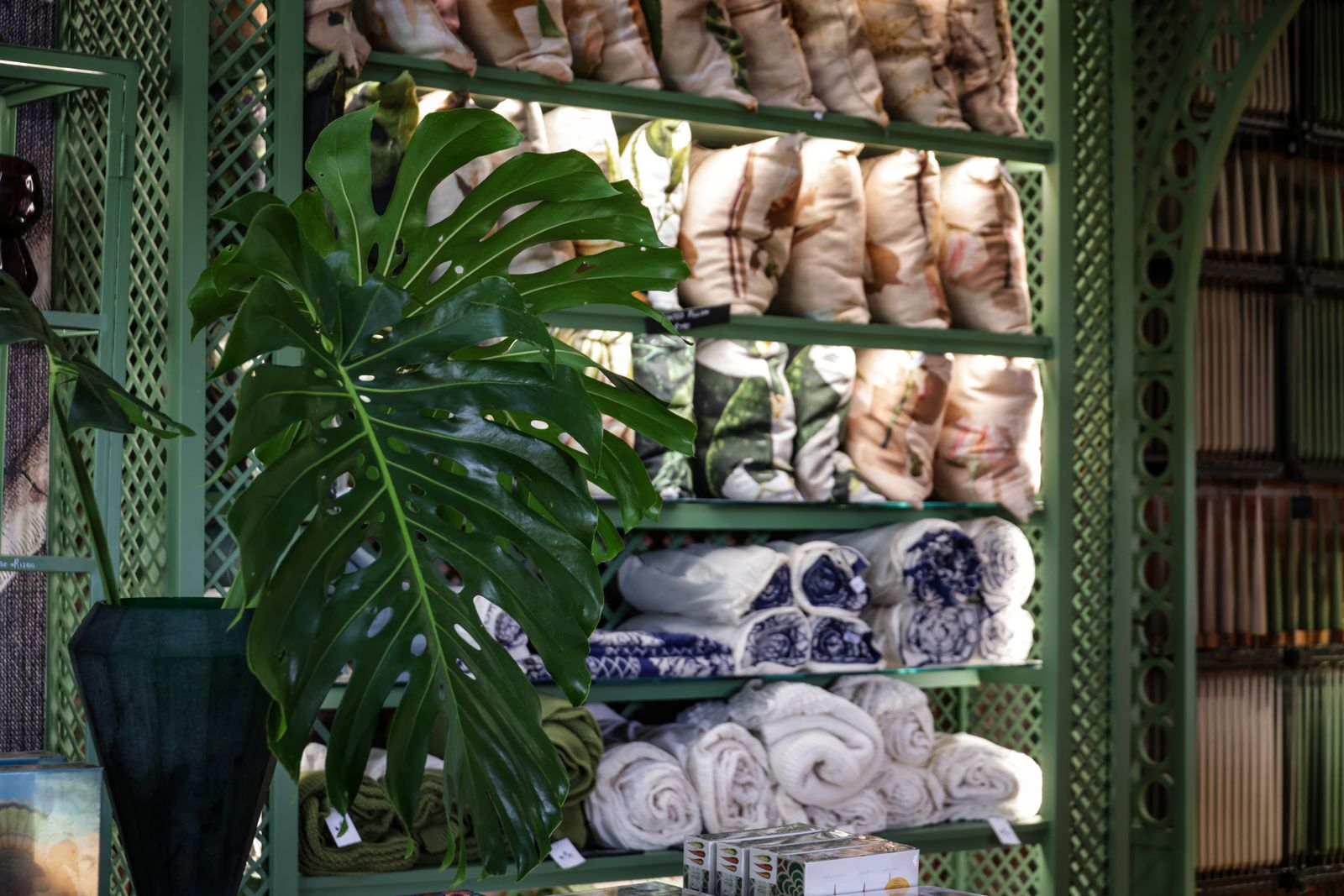
- Hollywood at Home, 703 N. La Cienega. Designer Peter Dunham’s shop for his own printed textiles, custom upholstery, and a rotating stock of vintage finds.
- Nathan Turner, 725 N. La Cienega. The decorator and author returned to shopkeeping in 2025 with a showroom of his wallpaper and fabric collections, antiques, and tabletop.
- Pat McGann Gallery, 746 N. La Cienega. Twentieth-century and antique furniture, lighting, and rugs, plus handwoven Indian textiles by master weaver Neeru Kumar.
- Harbinger, 752 N. La Cienega. Designer Joe Lucas’s trade showroom, opened in 2008, mixing textiles, wallpaper, lighting, and the Harbinger By Hand furniture line.
- McKinnon and Harris, 915 N. La Cienega. The Richmond, Virginia maker of handcrafted aluminum outdoor furniture, in a garden-set showroom near Santa Monica Boulevard.
Melrose Place
- Paul Ferrante, 8464 Melrose Place. Custom chandeliers, sconces, and lamps shown alongside period antiques, with the Los Angeles showroom doubling as the company’s headquarters. The strongest lighting stop on the walk.
Melrose Avenue, walking west toward the PDC
- Gracie, 8629½ Melrose Ave. The family firm, founded in New York in 1898, that hand paints chinoiserie wallpaper panel by panel. The LA showroom opened in 2017 across from the PDC.
- Dennis & Leen, 8720 Melrose Ave. European antiques and classical reproduction furniture, a longtime decorator resource on this block.
- Formations, 8732 Melrose Ave. Dennis & Leen’s conjoined neighbor, making hand-finished furniture and lighting with an old-world workshop sensibility.
That last block deposits you at the Pacific Design Center’s plaza, where the blue, green, and red Cesar Pelli buildings close the route with the city’s best free architecture moment.
How to shop it without a designer
Plenty of these doors welcome retail buyers, and the ones that do not will usually say so politely at the threshold. Hollywood at Home and Nathan Turner both run as true shops: walk in, browse, buy, with e-commerce to match. McKinnon and Harris keeps public weekday hours, Monday through Friday, 9 to 5, with appointments for project work. Galleries like Pat McGann sell to anyone serious about the object in front of them.
The trade rooms work differently. Paul Ferrante states it plainly: to the trade only. Harbinger describes itself as a to-the-trade showroom, open weekdays 10 to 5, and while browsing is generally tolerated, purchasing runs through a design professional. If a piece in a trade showroom stops you cold, the standard play is to hire a designer for the transaction; our guide to the interior designers defining Los Angeles right now is the place to start. For retail-first alternatives across the city, see where to buy modern furniture in Los Angeles.
Two practical notes. Showroom hours skew weekday; Saturdays are spotty and Sundays are mostly dark, so plan a Tuesday through Friday visit. And ask about lead times before falling in love. Much of what you will see is made to order, with delivery measured in weeks or months, not days.
Make a day of it
The lunch question has two reliable answers, both on the route. Zinqué, at 8684 Melrose Avenue directly across from the Design Center, is the working option: a French café modeled on Parisian zinc-counter bars, where designers camp with laptops, sample bags, and Le Bowl between appointments. Cecconi’s, at 8764 Melrose at Robertson, is the occasion option: Northern Italian, garden tables under palms, and the closest thing the design trade has to a clubhouse. Book ahead for Cecconi’s; walk into Zinqué.
Sequence the day like this: coffee at Zinqué at 10, the La Cienega stretch before noon, lunch, then Melrose Place and the Melrose Avenue blocks ending at the PDC plaza by 4. Street parking is metered and patrolled, so use a lot or rideshare in and walk everything between.
Questions readers ask
Is the La Cienega Design Quarter the same as Design Los Angeles?
Functionally, yes. The La Cienega Design Quarter was the merchants’ association founded in 2008; in January 2025 it rebranded as Design Los Angeles and opened membership to showrooms across the city. The physical district along La Cienega Boulevard, Melrose Place, and Melrose Avenue is unchanged, and most people in the trade still call it the LCDQ.
Can the public shop the La Cienega Design Quarter?
Mostly, yes. The district is street-level retail, and shops like Hollywood at Home, Nathan Turner, and McKinnon and Harris sell directly to the public during regular hours. A handful of showrooms, including Paul Ferrante and Harbinger, are to the trade only, meaning purchases go through an interior designer even though browsing is often welcome.
When is the next LEGENDS festival?
LEGENDS runs annually, produced by Design Los Angeles. The 2026 edition ran March 2 through 5 with the theme Behind the Scenes; the 2025 edition, Wanderlust, ran May 5 through 8. Dates and themes for the next edition post on the Design Los Angeles site, typically a few months out. The festival is free to walk, with some ticketed panels and parties.