Key takeaways
- Architect Cesar Pelli designed all three glass buildings, arriving in three installments: Blue 1975, Green 1988, Red 2012.
- The campus is open to the public Monday through Friday, 9 a.m. to 5 p.m., with no credential required.
- First-floor retail stores welcome everyone, while most upper-floor showrooms sell to the trade and prefer appointments.
- Homeowners buy through an interior designer, or through the PDC’s Shop the Building program for purchases without one.
- Named showrooms include HOLLY HUNT, A. Rudin, JANUS et Cie, DEDON, Kravet, Lee Jofa, and Kneedler Fauchere.
The Pacific Design Center is a 1.6 million square foot campus of interior design showrooms at 8687 Melrose Avenue in West Hollywood, spread across three glass buildings in blue, green, and red. More than 80 showrooms inside represent over 2,000 furniture, textile, and lighting manufacturers, and most of them sell to the trade, meaning to interior designers and architects rather than to walk-in shoppers. The public can still get in. The campus is open Monday through Friday, 9 a.m. to 5 p.m., first-floor retail stores are open to everyone, and the PDC runs a buying program that lets homeowners purchase from trade showrooms without hiring a designer. Here is how the whole thing works.
Three buildings by Cesar Pelli, built over four decades
All three PDC buildings came from the late Argentine-American architect Cesar Pelli, who later designed the Petronas Towers in Kuala Lumpur, and they arrived in three installments: blue in 1975, green in 1988, red in 2012. Pelli imagined them as oversized fragments of pure color dropped onto the low-rise streets of West Hollywood, and that is exactly how they read from Melrose Avenue.
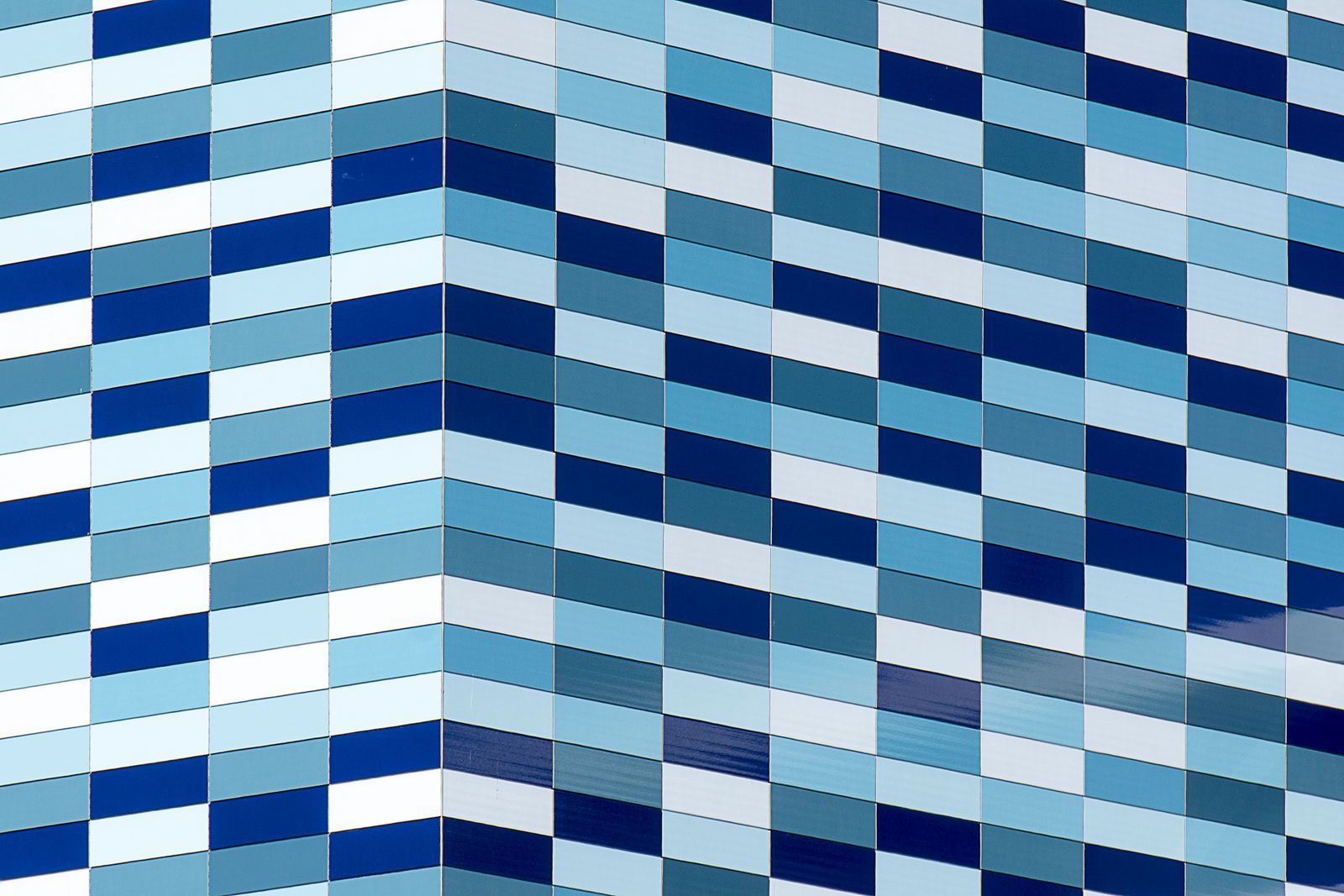
The Blue Building came first, designed while Pelli was at Gruen Associates with Norma Merrick Sklarek, one of the most accomplished Black female architects of her era, managing production. At 750,000 square feet wrapped in cobalt glass, it dwarfed everything around it, and locals named it the Blue Whale almost immediately. The Los Angeles Conservancy calls it a landmark “both beloved and reviled by its neighbors,” which is the polite version of the 1975 reaction. Either way, the building put West Hollywood on the design map for good.
The Green Building followed in 1988: 450,000 square feet, nine stories, more sculptural and vertical than its horizontal blue sibling, with chamfered edges that catch the afternoon light. The Red Building closed out the trilogy in 2012 with two curved, sloping towers holding 400,000 square feet of creative office space above a parking podium. Its tenants lean toward entertainment, fashion, and technology rather than design showrooms. Pelli’s own firm, Pelli Clarke & Partners, summed up the project with a line from the architect himself: “As a gathering place, the Pacific Design Center created the environment for West Hollywood to happen.”
How a design center actually works
A design center is a wholesale marketplace: the showrooms inside sell at trade prices to design professionals, who then resell to their clients, usually with a markup that covers sourcing, specification, and project management. This is the “to the trade” model, and it explains the slightly hushed, no-price-tags atmosphere on the upper floors. Showrooms at this level are not staffed for impulse purchases. They are staffed for designers placing custom orders: a sofa in a specific fabric, a fabric in a specific colorway, a dining table at a specific length, often with lead times of several weeks to several months.
So can you visit without a trade card? Yes. The PDC’s own visitor policy welcomes the public during business hours, Monday through Friday, 9 a.m. to 5 p.m. First-floor retail stores are open to anyone. Upper-floor showrooms generally let you browse, though some prefer appointments and a few admit trade only, so the polite move is to ask at the door. What you cannot do as a civilian is buy directly at trade price, which is where the programs in the next sections come in.
What is inside: the showrooms, grouped by what they sell
The PDC directory currently lists more than 80 showrooms, and they cluster into a few clear categories. A sampling of current tenants, by what they actually sell:
- Furniture. HOLLY HUNT (Suite B619) anchors the upholstery-and-case-goods tier, alongside A. Rudin (B653), the Los Angeles family firm that has built custom upholstery since 1912, plus Baker | McGuire (B525), David Sutherland (B182), and the English sofa maker George Smith (B307).
- Outdoor. JANUS et Cie (B146) and DEDON (B122) cover high-end exterior furniture, with Spain’s GANDIABLASCO Group (G166) in the Green Building.
- Textiles and wallcoverings. Kravet, Lee Jofa, and Brunschwig & Fils share Suite B690, with Cowtan & Tout (B647), Holland & Sherry (B305), and the venerable multiline showroom Kneedler | Fauchère (B600) nearby. This floor cluster is the densest fabric resource on the West Coast.
- Kitchens, bath, and hardware. Cooper-Pacific Kitchens (B360) and EuroConcepts (B121 and B124) handle full kitchen and bath programs.
- Rugs and home technology. JD. Staron (B538) for custom carpets; CinemaTech (M26) for screening rooms and seating.
Tenants rotate, so check the directory before making a trip around a single showroom. Many of these brands have no other Los Angeles floor space, which is the practical reason designers still drive here instead of ordering from a screen.
How homeowners work with the PDC
The standard route into the PDC’s trade showrooms is through an interior designer, who carries the accounts, knows the lines, and handles the ordering. If you are renovating at a scale that justifies professional help, that is still the best value: a good designer’s trade discounts often offset a meaningful share of their fee. Our guide to the interior designers defining Los Angeles right now is a reasonable place to start that search.
For everyone else, the PDC runs Shop the Building, a consulting and buying program for consumers who are not working with a designer. The Director of Design Services offers a complimentary consultation to match you with showrooms that fit your project and budget, and the program lets you purchase a limited number of items at trade price plus a modest administrative fee. It is built for the homeowner who needs one great sofa or a single room resolved, not a whole-house procurement operation. For retail alternatives with no program required, see our guide to where to buy modern furniture in Los Angeles.
Planning a visit
The PDC sits at 8687 Melrose Avenue at San Vicente Boulevard in West Hollywood, open Monday through Friday, 9 a.m. to 5 p.m., with on-site parking under the Red Building. Weekends are quiet; the showrooms keep weekday business hours, so plan accordingly. On campus you will find two restaurants, the Design Café and Silver Bullet Express, plus the 294-seat SilverScreen Theater, a conference center, and a design gallery with rotating exhibitions, all listed on the PDC site.
Give yourself two hours minimum. The Blue Building holds the bulk of the showrooms, and its long interior galleria rewards an unhurried walk, while the plaza between the buildings is one of the better free architecture experiences in the city. The PDC also pairs naturally with the showrooms along La Cienega Boulevard a few blocks east; our walking guide to the La Cienega Design Quarter maps that route. Together they make a full design day on foot, which is a rare sentence to write about Los Angeles.
Questions readers ask
Can the public walk into the Pacific Design Center?
Yes. The campus is open to the public Monday through Friday, 9 a.m. to 5 p.m., and no credential is required to enter. First-floor retail stores welcome everyone, and most upper-floor showrooms allow browsing, though a few are appointment-only or trade-only. Buying from trade showrooms requires either a designer or the PDC’s Shop the Building program.
How does Shop the Building pricing work?
Through the program, consumers without a designer can buy a limited number of items at to-the-trade prices plus a modest administrative fee, per the PDC’s published terms. The consultation with the Director of Design Services is complimentary. Whether the final number beats retail depends on the item, but on trade-only lines there is no retail price to compare, so the program is often the only way in.
Is the Pacific Design Center worth visiting just for the architecture?
Yes, if you care about Los Angeles buildings at all. Cesar Pelli’s three glass volumes, finished in 1975, 1988, and 2012, are among the city’s most recognizable postwar landmarks, and the Blue Whale alone justifies the stop. Entry costs nothing on weekdays, the plaza is public, and the galleria interiors are open during business hours.