Key takeaways
- SoFi Stadium hosted eight World Cup matches between June 12 and July 10, 2026, including the United States against Paraguay on June 12.
- HKS designed SoFi Stadium roughly 100 feet below grade, with a translucent ETFE canopy of 302 panels covering the bowl.
- Studio-MLA, founded by Mia Lehrer, shaped more than 25 acres of parks and plazas across the 300-acre Hollywood Park district.
- Kelly Wearstler designed Downtown L.A. Proper inside a 1920s Curlett and Beelman building with around 100 different tile types.
- The official FIFA Fan Festival ran at the Los Angeles Memorial Coliseum, Thursday through Sunday, with admission from $10.
The 2026 FIFA World Cup ran from June 11 to July 19, and Los Angeles hosted eight matches at SoFi Stadium in Inglewood between June 12 and July 10. For a design audience the tournament was never mainly a sports story. It put a global spotlight on one of the most ambitious buildings of the past decade, on the 300-acre district around it, and on a city whose hotels and dining rooms have quietly become some of the best interiors in America. All of that is still here, and this is the guide to walking it.
Eight matches at a stadium built like a landform
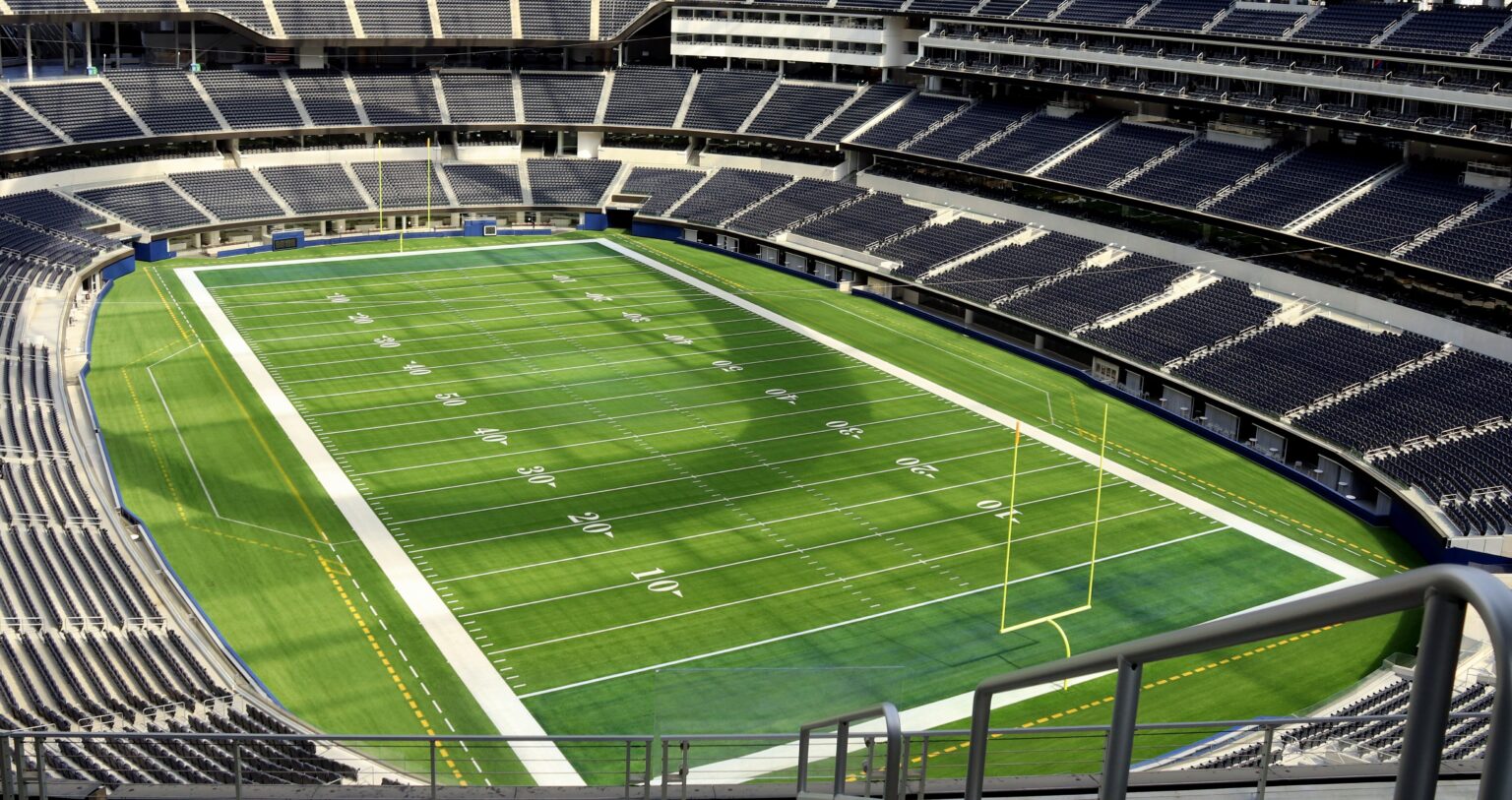
SoFi Stadium hosted five group-stage matches between June 12 and June 25, two Round of 32 matches on June 28 and July 2, and a quarterfinal on July 10, according to the official match schedule. The headline fixture was the United States against Paraguay on June 12, the team’s first World Cup match on home soil since 1994. For the duration the building dropped its sponsor name and operated as Los Angeles Stadium, under FIFA’s clean-venue rules.
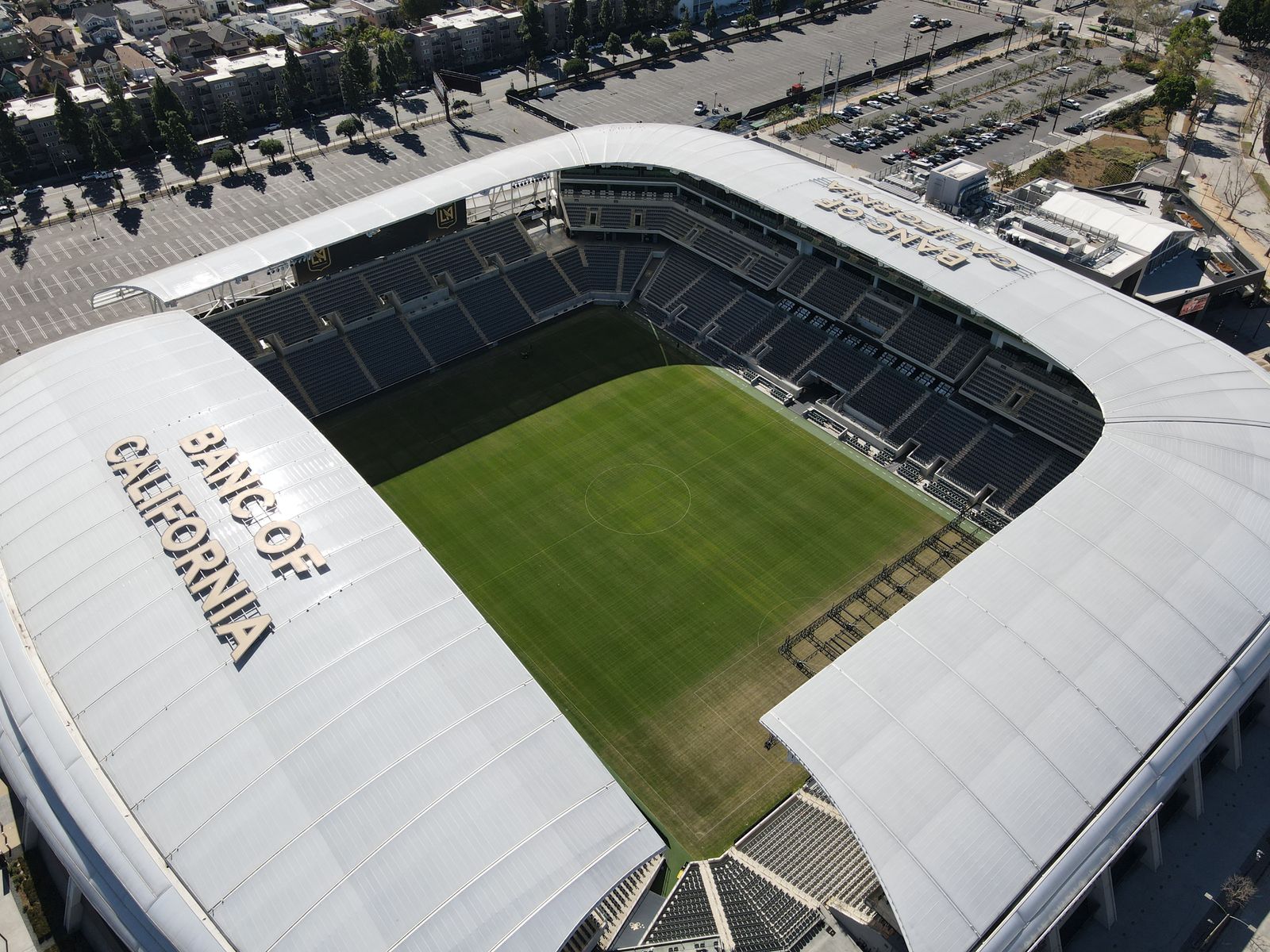
The architecture is the reason to keep reading. Designed by HKS, the stadium sits roughly 100 feet below street level, a move forced by FAA height limits under the LAX flight path. Crews removed an estimated 7.5 million cubic yards of earth to sink the bowl, so the building reads from the street as a low pavilion rather than a monument. The canopy is the signature: roughly a million square feet of translucent ETFE in 302 panels, 46 of them operable, printed with a frit pattern that cuts solar gain while letting the California light through. Inside hangs the Samsung Infinity Screen, a double-sided oval video board weighing 2.2 million pounds and carrying 80 million pixels.
FIFA’s pitch requirements forced a real renovation. A regulation World Cup field is about 74 yards wide, some 20 yards wider than an NFL field, so more than 400 corner seats were removed to fit the grass, bringing tournament capacity to roughly 69,650. The corners now sit closer to the touchline, which should make the room sound more like a football ground than a Sunday in the NFL.
Hollywood Park, the district around the stadium
The stadium anchors Hollywood Park, a 300-acre mixed-use district built on the former racetrack site and billed as the largest urban development under construction in the western United States. The master plan pairs the stadium with the 6,000-seat YouTube Theater and the 2.5-acre American Airlines Plaza, all capable of running events simultaneously. At full build-out the district calls for up to 890,000 square feet of retail, five million square feet of office space, and 2,500 residences.
The landscape is the part designers should study. Studio-MLA, the Los Angeles practice founded by Mia Lehrer, shaped more than 25 acres of parks and plazas across the site, including the lake at its center. The planting leans native and drought-tolerant, and the grading carries visitors down toward the sunken bowl so the transition from street to seat feels like descending into a canyon. If you have a match ticket, arrive early and walk the perimeter before kickoff.
Where design-minded visitors should stay
The strongest rooms in town right now are restorations, not new builds. Three are worth planning a trip around, and all three are a straight shot from Inglewood by car.
- Downtown L.A. Proper. Kelly Wearstler’s interiors fill a 1920s Renaissance Revival building by Curlett & Beelman, with a hand-painted lobby mural by Abel Macias, a Judson Studios stained-glass installation, and around 100 different tile types threaded through the rooms. Suites occupy the building’s former basketball court and indoor plunge pool.
- The Georgian, Santa Monica. The 1933 oceanfront Art Deco landmark reopened after a restoration by London and Los Angeles studio Fettle, which kept the turquoise facade and reopened the Georgian Room, a former celebrity hideaway shuttered for six decades, complete with a 1918 Steinway built into the bar.
- Hotel Per La, Downtown. Set in the 1922 Giannini Building, the original Bank of Italy headquarters, with public spaces refreshed by Jaqui Seerman. The restored gold-and-blue Italianate ceiling, marble floors, and Doric columns make the lobby one of the great free architecture visits in the city.
For a longer study of these rooms and a dozen more, see our guide to the LA hotel lobbies and restaurant interiors worth studying.
Where to eat between matches
Two dining rooms justify the reservation effort on interiors alone. Both book up fast, so set a reminder for when the books open.
- Mother Wolf, Hollywood. Evan Funke’s Roman restaurant inside the Citizen News building, with interiors by Martin Brudnizki Design Studio: Murano glass lighting, Venetian-inspired terrazzo, antiqued mirror, and an open kitchen built around a wood-burning oven. It holds a spot in the Michelin Guide, and the room is as composed as the cacio e pepe.
- Damian, Arts District. Enrique Olvera’s Los Angeles restaurant occupies a converted warehouse with a design collaboration between architect Alonso de Garay and interior designer Michaela De Bernadi. Polished concrete, exposed brick, and a planted courtyard read like a Mexico City patio translated into California light.
Both designers belong to a larger story about who is shaping the city’s rooms right now. We mapped that field in the interior designers defining Los Angeles.
How the city dresses for a global event
The official FIFA Fan Festival ran at the Los Angeles Memorial Coliseum in Exposition Park, a 1923 landmark that has hosted two Olympics and is preparing for a third. The festival operated Thursday through Sunday, with match broadcasts, cultural programming and performers including Steve Aoki, Normani and Los Lobos. The Coliseum itself is the lasting reason to go to Exposition Park: the Metro E Line stops twice within walking distance, at Expo Park/USC and Expo/Vermont.
Beyond the Coliseum, the host committee designated ten official fan zones across Southern California with watch parties, food and live events, and the city carried tournament wayfinding, banners and pop-up retail through mid-July. For visitors who would rather spend an off day shopping the city’s design corridors than watching a third-place group match, our guide to where to buy modern furniture in Los Angeles covers the showrooms worth the drive.
Questions readers ask
How many World Cup matches did Los Angeles host in 2026?
Eight. SoFi Stadium in Inglewood hosted five group-stage matches from June 12 to June 25, two Round of 32 matches on June 28 and July 2, and a quarterfinal on July 10. The United States played twice there, opening against Paraguay on June 12 and closing group play on June 25, per the official schedule.
Who designed SoFi Stadium and what makes it architecturally significant?
HKS designed the stadium, which opened in 2020. Its bowl sits about 100 feet below grade to satisfy FAA height limits near LAX, and a translucent ETFE canopy of 302 panels covers the seating, the field, and an adjacent public plaza. The Samsung Infinity Screen, a double-sided oval video board, hangs from the roof structure above the pitch.
Where was the official Los Angeles fan festival for World Cup 2026?
At the Los Angeles Memorial Coliseum in Exposition Park, Thursday through Sunday through the tournament. Tickets started at $10 and children 12 and under entered free. Ten additional official fan zones operated across Southern California. The Coliseum remains open as a 1923 landmark, served directly by the Metro E Line.