Key takeaways
- Santa Monica spans four housing types: 1920s Spanish revival north of Montana, courtyard apartments, Sunset Park ranches, and bluff-front condos.
- Marine layer mornings run grey and shadowless, so warm reddish or ochre whites stay alive while cool blue-leaning whites read lifeless.
- Flat light kills contrast, so texture carries the room through plaster, rift oak, nubby wool, boucle, and handmade tile.
- Near the beach, specify 316 marine-grade stainless, powder-coated aluminum, teak, and solid brass over corrosion-prone 304 stainless and plated hardware.
- Shop the look on Montana Avenue at Hummingbird Home, Brentwood General Store, and ACME 5 Lifestyle, plus Jenni Kayne Home at Brentwood Country Mart.
Santa Monica interior design works best when it treats the ocean as a light condition rather than a theme. The strongest rooms here skip the anchors, rope mirrors, and navy stripes entirely. They answer the coast with palette and material instead: warm whites that stay warm under grey morning skies, plaster and oak that hold texture in flat light, brass left to darken, fabrics that shrug off salt air and sandy dogs. The result reads coastal without a single seashell. This guide covers the housing stock that sets the terms, how to design for marine layer light, which materials actually survive near the water, and where to shop the look without leaving the Westside.
The housing stock: Spanish revival, courtyards, ranches, and condos
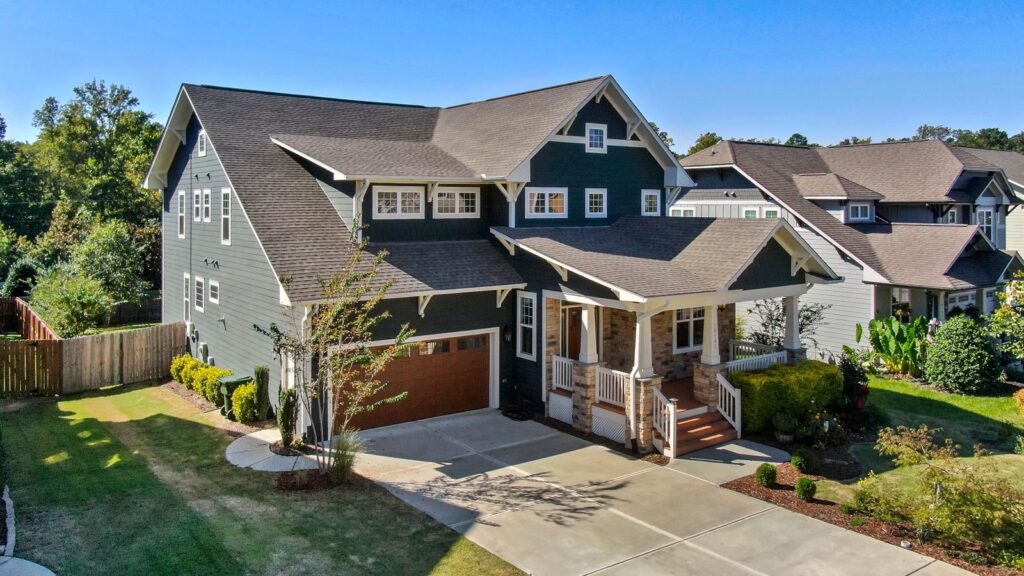
Santa Monica is four housing types wearing one zip code, and good interiors start by reading which one they are in. North of Montana holds the city’s 1920s Spanish Colonial Revival stock, including a run of mid-1920s houses by Santa Monica architect John Byers, built of handmade adobe brick with low red clay-tile roofs and whitewashed plaster walls. These houses come with their own interior logic: thick walls, deep window reveals, arched openings, dark wood ceilings. Fight it and the room goes wrong. Work with it, lighter plaster, vintage rugs, iron and wood kept honest, and the house does most of the design for you.
The courtyard apartments
Santa Monica’s apartment stock is unusually good, and the courtyard buildings are the reason. The five-story Charmont, built in 1928 by architect Max Maltzman, mixes Mediterranean and Art Deco around a walled entry courtyard with a tiled two-tier fountain, and sits on the National Register of Historic Places. The type evolved from the 1920s bungalow court into the postwar courtyard apartment, units arranged around shared landscaped open space, a lineage the Santa Monica Conservancy documents in the San Vicente Courtyard Apartments Historic District. For renters and condo owners in these buildings, the courtyard is the view. Orient seating toward it and treat window light as the main event.
Postwar ranches and the ocean-adjacent condos
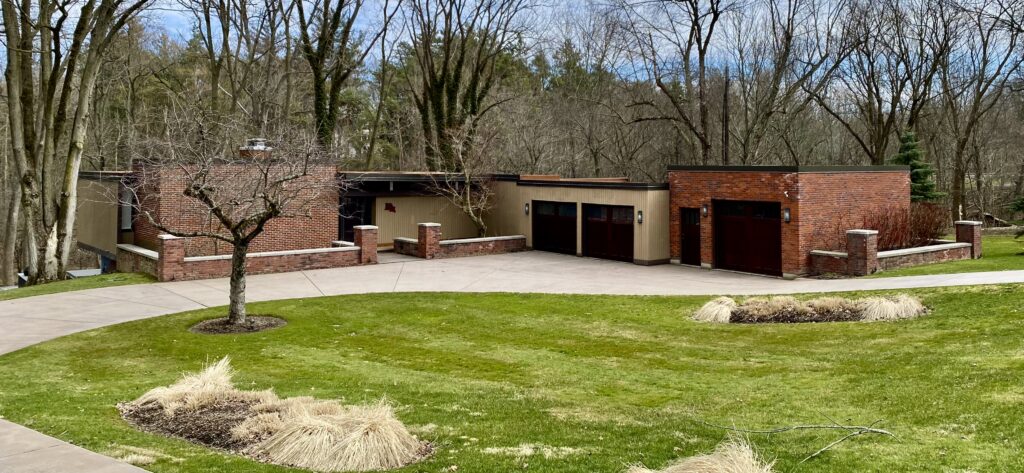
South of the Spanish revival belt, Sunset Park is mostly single-story houses from the 1920s through the 1940s, much of it built for workers at the Douglas Aircraft plant, which turned out more than 10,000 planes before closing in 1975. These ranches and prewar cottages take a relaxed, mid-century-leaning interior well: low furniture, wood tones, clerestory light where remodels have added it. Then there are the condo buildings along Ocean Avenue and the bluffs, where the brief flips. The view is the architecture, so interiors stay quiet, low-contrast, and glare-conscious, with nothing shiny between the sofa and the horizon.
Designing for marine layer light
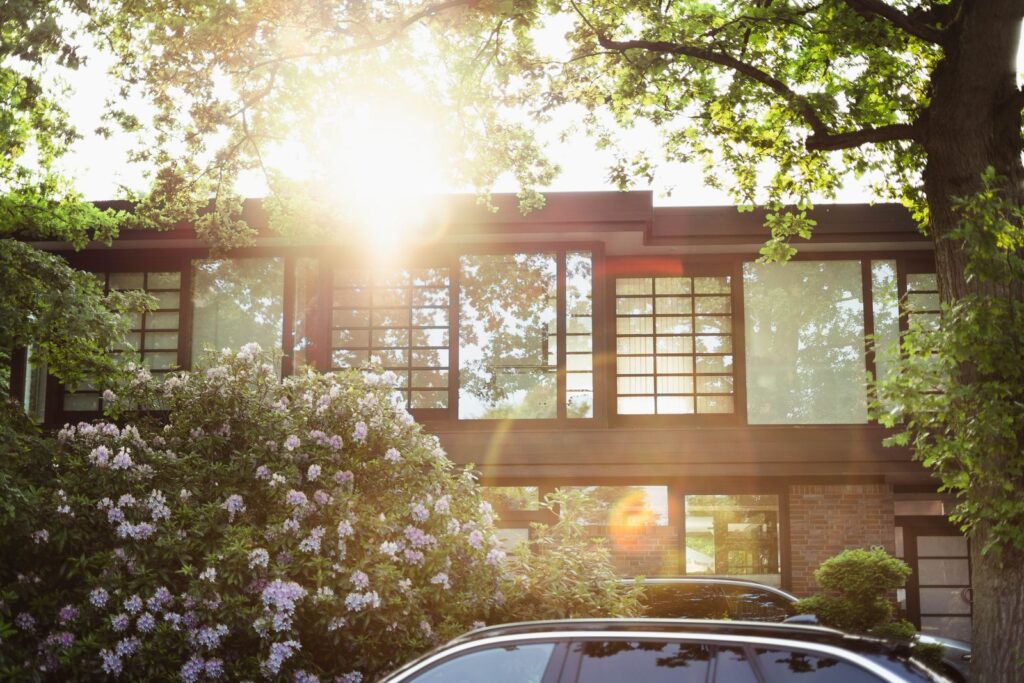
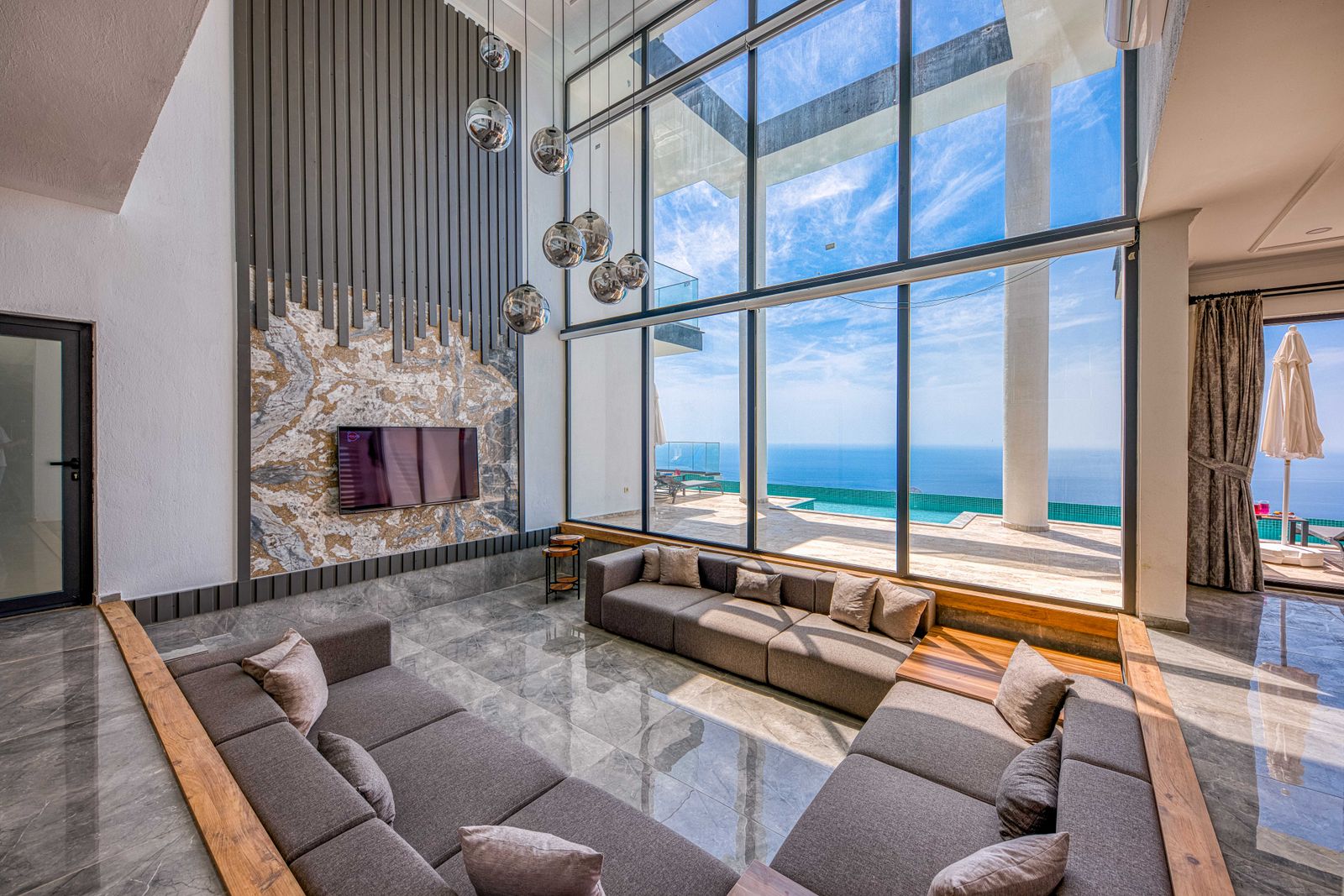
The defining fact of Santa Monica light is that for much of late spring and early summer, mornings are grey. The marine layer forms when cool, moist ocean air gets trapped under a warmer inversion layer, producing the overcast locals call May Gray and June Gloom, which typically burns off by midday. Inland Los Angeles wakes up to yellow sun. Santa Monica wakes up to a soft, cool, shadowless grey, then pivots to hard western glare in the afternoon. A room here has to look good under both.
The palette response is warmth without yellowness. Cool, blue-leaning whites go morgue-like under the marine layer, while creamy whites with a drop of red or ochre stay alive. Test paint on the north and west walls and judge it at 9am on an overcast day, not at noon. Flat light also kills contrast, so texture has to carry the room: limewashed or troweled plaster, rift oak, nubby wool and boucle, handmade tile. These surfaces catch what little directionality grey light has. In the afternoon, when the sun swings low off the water, linen sheers or solar shades on west glazing tame the glare without blocking the view.
This is also where Santa Monica diverges from its neighbor to the south. Venice interior design runs looser and more collected, bleached oak and slipcovers and a surfboard in the hallway. Santa Monica skews more polished and tailored: fully upholstered pieces, dressmaker details, rooms that look finished rather than assembled. Same light, different temperament.
Salt air and materials: what actually corrodes
Within a few blocks of the beach, salt-laden air is a design constraint, not a footnote. Airborne chlorides attack metal, and the failures are predictable: plated hardware pits and flakes, untreated iron and standard steel rust, and even standard 304 stainless can corrode, because chloride pitting affects 304 in coastal conditions that 316 marine-grade stainless, with its added molybdenum, is formulated to resist. For balconies, terraces, and anything near windows that stay open, specify 316 stainless, powder-coated aluminum, or solid brass and bronze, which corrode gracefully instead of structurally.
Wood has its own coastal rules. Teak is the default for good reason, but untreated teak weathers to silver-grey within months near the coast, so decide up front between the silvered look and a maintenance schedule. Indoors, the marine layer’s humidity swings argue for quality veneers and quartersawn solid wood over wide flat-sawn slabs that move. For soft goods anywhere near open windows, solution-dyed acrylics and high-grade performance weaves resist both salt air and UV. Cheap outdoor fabric fades to chalk in a season of western sun.
The no-cliche coastal playbook
The way to read coastal without theme is to let materials do the talking and ban the iconography. No anchors, no rope, no “beach this way” signage, no navy-and-white stripe as a personality. What replaces it is a short list of disciplined moves that the best Westside projects share, and that several of the interior designers defining Los Angeles right now have turned into a recognizable regional register.
- Texture over theme. Plaster walls, jute and wool underfoot, cane, ceramic, raw-edge linen. The ocean shows up as sensation, light and air and surface, not as decoration.
- Performance fabrics that don’t look it. The current generation of performance linens and boucles passes for the real thing. Use them on sofas, dining chairs, and anything white, because sunscreen, salt air, and wet swimsuits are facts of life here.
- Unlacquered brass, allowed to age. Lacquered finishes fail and look worse for it. Unlacquered brass darkens evenly into a living finish that suits both a 1920s Spanish house and a bluff-front condo.
- A faded, mineral palette. Olive, terracotta, oxidized blue-green, sand. Color pulled from the bluffs and the water at 5pm, not from a nautical flag.
- One honest vintage layer. A worn rug, a 1940s lamp, a Mexican or Spanish piece that nods to the architecture. It keeps the polish from going sterile.
Where to shop nearby
The local shopping concentrates on Montana Avenue, with one essential stop at the Brentwood Country Mart, and all four of these are open and verified as of mid-2026:
- Hummingbird Home & Co., 1021A Montana Ave. Tabletop, dinnerware, vases, pillows, art, and small furniture with an entertaining bent. Open daily.
- Brentwood General Store, 1230 Montana Ave #108. Curated home goods, tableware, textiles, and vintage pieces at the corner of Montana and Euclid. Open seven days.
- ACME 5 Lifestyle, 1404 Montana Ave. Sofas, dining tables, lighting, rugs, mirrors, and custom pieces, much of it handcrafted, with a desert warehouse showroom behind it.
- Jenni Kayne Home, Brentwood Country Mart, 225 26th St. The fullest retail expression of the California-coastal-minimal look: oak furniture, textural decor, rugs, and textiles.
For bigger contemporary pieces and a wider net across the city, see our guide to where to buy modern furniture in Los Angeles.
Questions readers ask
What defines Santa Monica interior design?
A polished take on California coastal: warm whites and plaster chosen for grey marine layer mornings, oak and wool texture in place of nautical theme, performance fabrics, unlacquered brass, and a faded mineral palette. It is more tailored than Venice’s beach modern, and it adapts to the local housing stock, from 1920s Spanish revival to bluff-front condos.
How does the marine layer change design choices?
Coastal mornings run grey and shadowless through late spring, so cool whites read lifeless and flat light erases contrast. Designers compensate with warm, slightly red or ochre whites, heavy texture like plaster and boucle that catches soft light, and west-facing glare control such as linen sheers for the hard afternoon sun. Always test paint on an overcast morning.
What materials hold up near the ocean in Santa Monica?
For outdoor and near-window use: teak, powder-coated aluminum, 316 marine-grade stainless steel, and solid brass or bronze, with solution-dyed acrylic fabrics for cushions. Standard 304 stainless and plated hardware can pit and rust in salt air. Expect untreated teak to silver within months, and choose quartersawn wood indoors to handle coastal humidity swings.