Key takeaways
- Kelly Wearstler threaded roughly 100 tile types through Downtown L.A. Proper, kept calm by a disciplined earthen palette.
- Santa Monica Proper, also by Wearstler, lets texture do color’s work within a narrow neutral band.
- The Maybourne Bar by André Fu anchors on one onyx slab, with everything else in supporting roles.
- Sally Breer styled Hotel Covell’s suites around a fictional character, sourcing every object he would own.
- At home, layer three light sources per room, keep bulbs warm, and dim every circuit.
The best free design education in Los Angeles is a hotel lobby. Eleven rooms across the city reward a detour right now: the two Proper hotels Kelly Wearstler built downtown and in Santa Monica, the restored Georgian on Ocean Avenue, the gardens and dining rooms of Hotel Bel-Air, the onyx bar at the Maybourne Beverly Hills, the narrative suites of Hotel Covell, and the dining rooms at Mother Wolf, Felix, Gjelina, Damian, and Funke. Every one is open, every designer credit below is verified, and most ask nothing more than the price of a drink. With the city full of World Cup visitors this summer, consider this the interiors track of our design lover’s guide to the host city.
The hotel lobbies worth studying
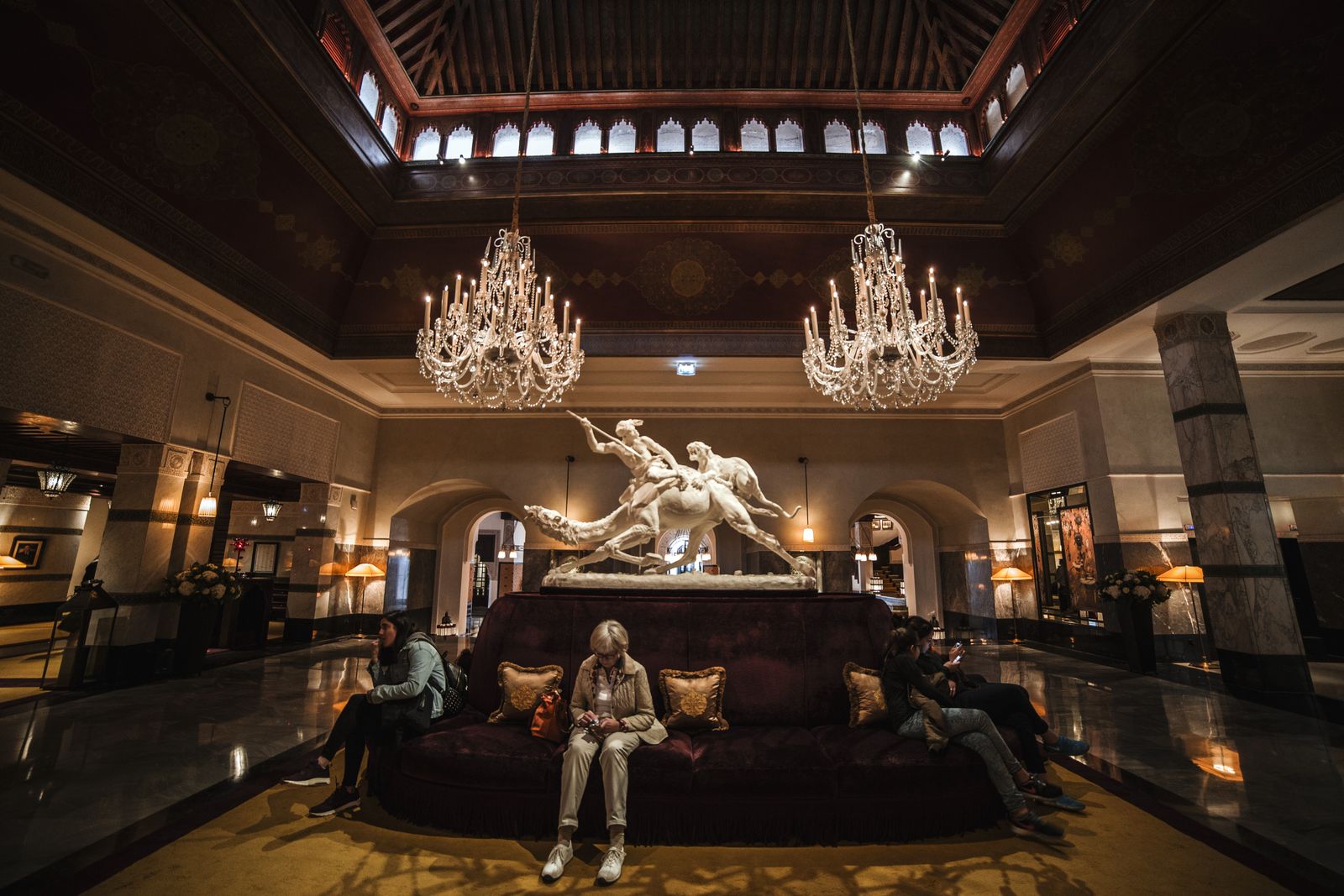
Six hotels currently make the strongest case for hospitality design as public classroom. Each pairs a significant building with a designer working at full strength, and each lobby is open to anyone who walks in with purpose.
Downtown L.A. Proper
Kelly Wearstler’s interiors fill a 1927 Renaissance Revival building by Curlett & Beelman, a former club with a basketball court and plunge pool that now serve as suites. The lobby carries a hand-painted mural of Mexican folk animals by Abel Macias and a stained-glass installation by Judson Studios, the city’s oldest glass house. Study the pattern density. Wearstler threaded roughly 100 tile types through the property, and the room still reads as calm because the palette holds to earthen terracotta, ochre, and green. That is the lesson: pattern multiplies safely when color stays disciplined.
Santa Monica Proper
Wearstler again, in a quieter register. The hotel joins a 1920s Spanish Colonial Revival building to a new wing, and the interiors run sand-toned and tactile: a hand-carved reception desk with shell-like linework, an oak floor laid in an octagonal pattern drawn from a beach umbrella seen from above, ceramics by Morgan Peck and Ben Medansky. The project took Hotel of the Year at the 2020 AHEAD Americas awards. Study how texture does the work color usually does. Almost everything sits within a narrow neutral band, so plaster, travertine, rope, and raw wood carry the interest. For more rooms in this register, see our Santa Monica interior design guide.
The Georgian, Santa Monica
The 1933 Art Deco landmark on Ocean Avenue reopened in 2023 after a restoration by Fettle, the London and Los Angeles studio. The turquoise facade stayed. Inside, Fettle reopened the Georgian Room, a former celebrity hideaway shut for six decades, and kept a 1918 Steinway built into the bar. Study the color confidence. Most restorations sand a building down to safe cream. Fettle held the line on saturated teal, oxblood, and brass, and the rooms feel period without feeling preserved.
Hotel Bel-Air
The 1946 Stone Canyon property reopened in 2011 after a two-year renovation, with rooms and public spaces by Champalimaud and dining venues by Rockwell Group. The interiors draw on the 1930s through 1950s, the decades when the hotel’s character formed. Study the threshold work. The property dissolves the line between garden and room better than any hotel in the city: courtyards open off corridors, fireplaces sit outdoors, and the Spanish Colonial architecture frames planting at every turn. Homeowners chasing indoor-outdoor flow should walk it slowly.
The Maybourne Beverly Hills
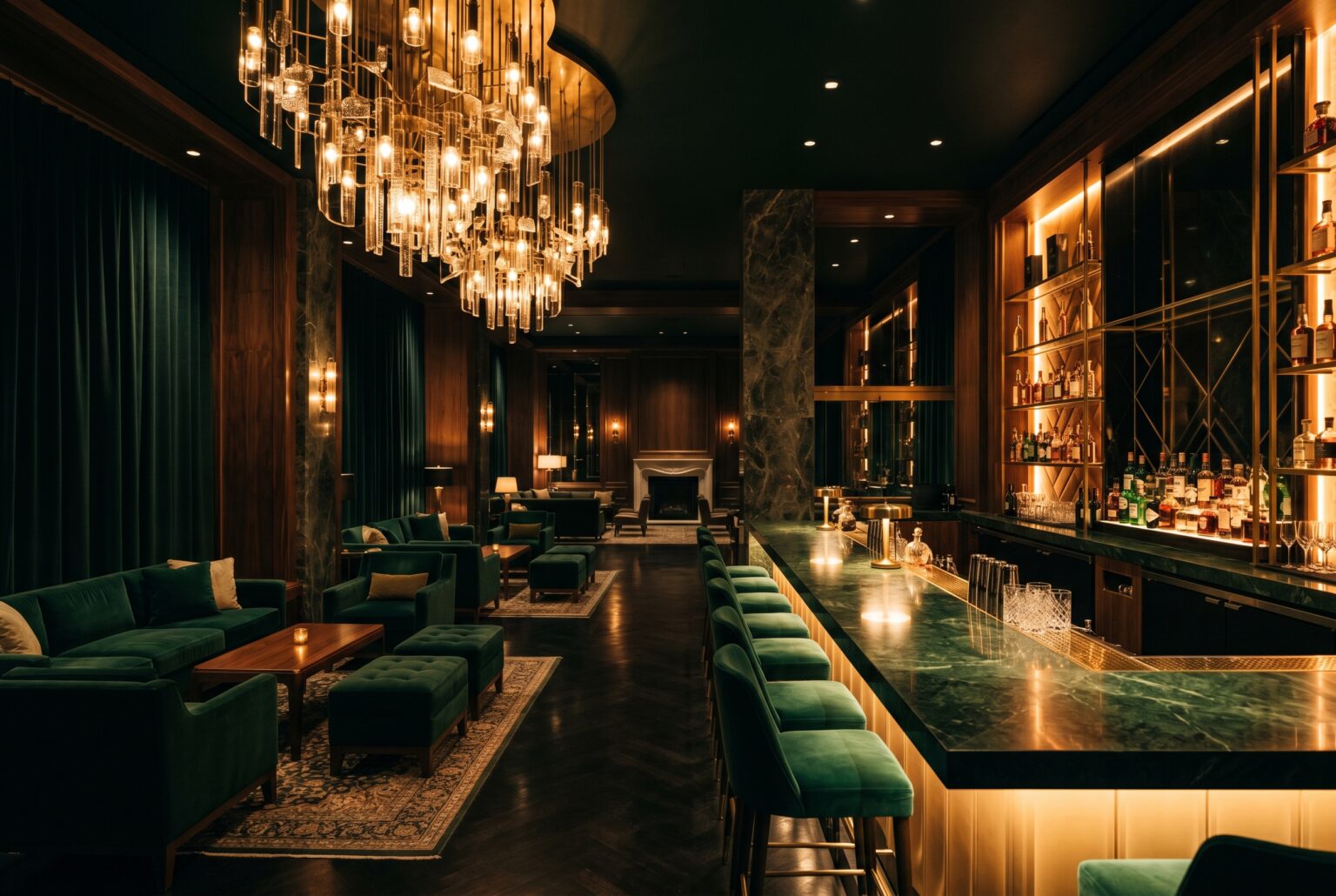
The Maybourne Bar off the lobby is the single most instructive small room in Los Angeles. André Fu, in his first American hospitality project, anchored the space with a bar carved from solid Turkish silver onyx, trimmed in polished nickel, ringed with stools in Yves Klein blue and tangerine, and paneled in ivory and charcoal burr walnut under photography by Mary McCartney. Upstairs, the guest rooms carry soft pastel interiors by Bryan O’Sullivan Studio. Study the single-gesture strategy: one extraordinary material, the onyx, and everything else in supporting roles.
Hotel Covell, Los Feliz
The smallest entry and the most transferable. Designer Sally Breer furnished this handful of suites above a wine bar on Hollywood Boulevard around a fictional character, George Covell, with each suite styled as a chapter of his life: 1930s Oklahoma in reclaimed wood and raw steel, 1950s New York, a Paris apartment in whitewashed wood and brass. Study the narrative method. Breer made every sourcing decision answer one question: would this person own this object? It is the cheapest decorating discipline there is, and it works in any house.
The restaurant interiors worth a reservation
Five dining rooms currently justify booking on design grounds alone. All five were verified open as of this writing, which matters in a city that closes restaurants as fast as it opens them.
Mother Wolf, Hollywood
Evan Funke’s Roman dining room inside the 1930 Citizen News building carries interiors by Martin Brudnizki Design Studio: Murano glass lighting, Venetian-inspired terrazzo, antiqued mirror, and an open kitchen built around a wood-burning oven. Reservations open 14 days out on Resy and still go fast. Study the ceiling plane. Brudnizki pulls the eye up with light fixtures scaled like jewelry for the room, which makes a big space feel occasion-grade rather than cavernous.
Felix Trattoria, Venice
Funke’s first restaurant, on Abbot Kinney, pairs architecture by David Hertz with interiors by Wendy Haworth Design Studio, who started from the idea of an Italian grandmother’s kitchen and layered in sleeker mid-century moves. The glassed pasta room near the entrance turns production into theater. Study the homey-to-polished ratio. Haworth balances warm wood, patterned tile, and greenery against clean modern seating so the room reads relaxed but never sloppy. That balance is exactly what most casual home kitchens and dining rooms miss.
Gjelina, Venice
The Abbot Kinney standard-bearer since 2008, with an interior concept by Studio MAI that the firm describes as unadorned casualness and industrial elegance. Dark timber, smoked mirror, a long communal table, and a rear patio that half of Venice has tried to copy. Study the durability of restraint. Nearly two decades on, nothing in the room dates it, because nothing in it chased a trend. Materials that wear in rather than wear out are the whole story here.
Damian, Arts District
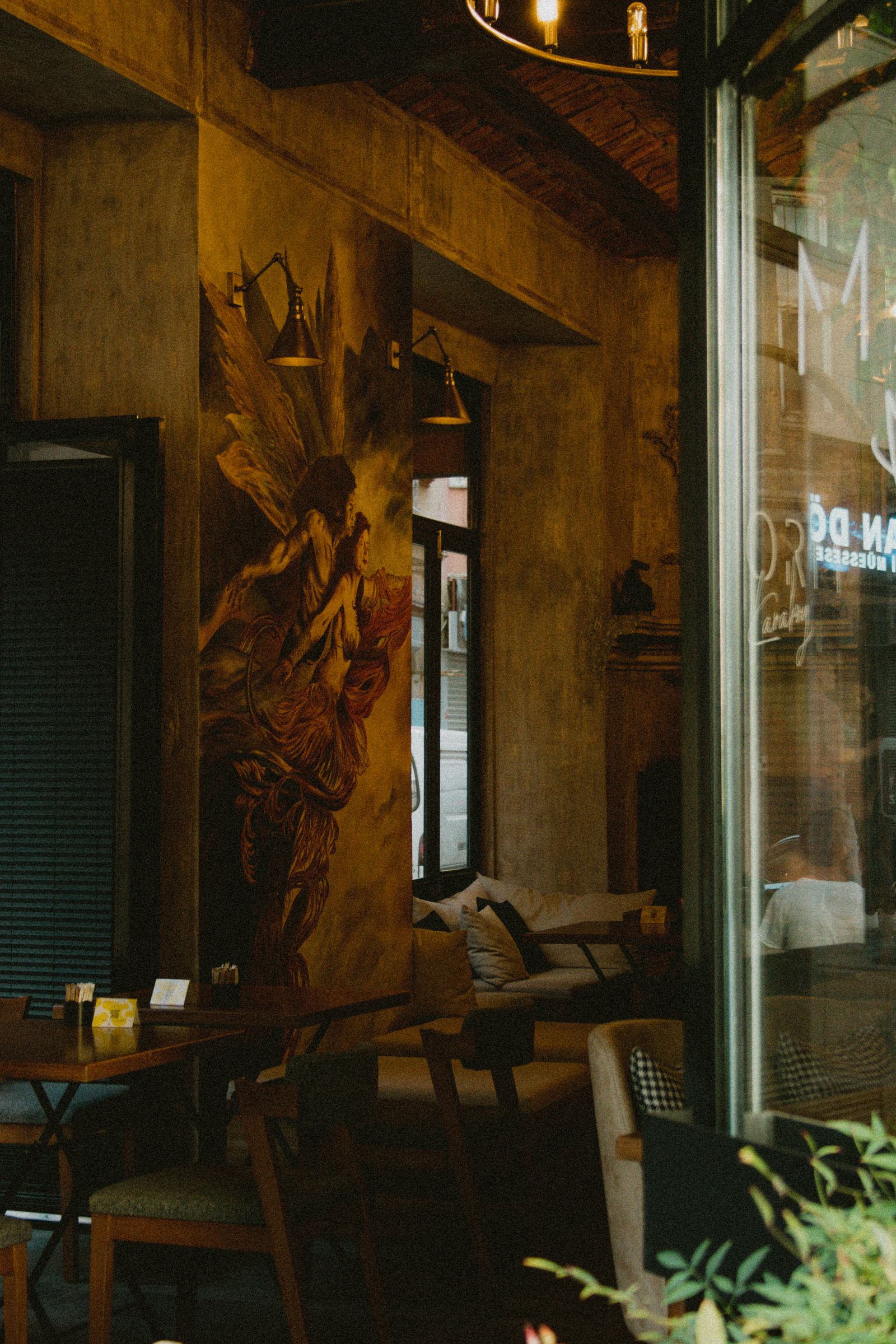
Enrique Olvera’s Los Angeles restaurant occupies a converted warehouse shaped by architect Alonso de Garay with interior designer Michaela De Bernadi. Polished concrete, exposed brick, handmade ceramics, and a planted courtyard read like a Mexico City patio translated into California light. Study the courtyard logic. The room organizes around its open-air center the way a house can organize around a garden, and the hard industrial shell makes the planting feel twice as green by contrast.
Funke, Beverly Hills
The most ambitious restaurant build in recent LA memory. Dan Brunn Architecture led the transformation of a historic Art Deco building, working with interior designer Clint Nicholas across three stories and more than 10,000 square feet: a vaulted wood-beamed lobby, a marble amaro bar, a glass pasta lab, Loro Piana wall treatments, and an installation of more than 270 hand-blown Murano glass pendants over the double-height dining room. Brunn cites Carlo Scarpa, Gio Ponti, and Marco Zanuso. Study the sequencing. The building unfolds room by room, compression then release, the oldest trick in hospitality and still the best.
Several of these designers appear in our running survey of the interior designers defining Los Angeles right now, which is the logical next read.
What a homeowner can steal from these rooms
Three lessons transfer directly from hospitality to residential work, and none requires a hospitality budget.
- Layer the lighting, then dim all of it. No room on this list relies on overhead light. Mother Wolf and Funke mix glowing pendants, wall washes, and table-level lamps, all warm, all dimmed. At home that means three sources per room minimum, bulbs at 2700K or below, and dimmers on every circuit. Lighting is the cheapest change with the largest effect in this entire article.
- Take booth scale seriously. Restaurant banquettes feel good because the numbers are tight: seat heights around 18 inches, table edges close to the seat, high backs that wrap the sitter. A breakfast nook built to those dimensions outperforms a loose table and chairs every time. Measure a booth you love before you commission one.
- Pick one material contrast and commit. Damian sets soft planting against raw concrete. The Maybourne Bar sets one slab of onyx against quiet walnut. The move is always a pair, rough against fine or cold against warm, repeated with discipline. Five materials fighting for attention reads as noise. Two in deliberate tension reads as design.
Questions readers ask
Can you visit these hotel lobbies without being a guest?
Yes. Hotel lobbies, bars, and restaurants are open to the public, and ordering a coffee or a cocktail buys you all the time you need. The Maybourne Bar, the Georgian Room, and the Proper lobbies welcome walk-ins. Hotel Bel-Air is best seen with a reservation at the bar or restaurant, since the property is gated and residential in feel.
Who designed the Proper hotels in Los Angeles?
Kelly Wearstler designed both. Downtown L.A. Proper occupies a 1927 Curlett & Beelman building with commissioned work from muralist Abel Macias and Judson Studios stained glass. Santa Monica Proper joins a 1920s Spanish Colonial Revival building to a new wing, in a sand-toned palette built from local ceramics, carved wood, and vintage furniture. It won Hotel of the Year at the 2020 AHEAD Americas awards.
How far in advance should you book the restaurants on this list?
Mother Wolf opens reservations 14 days out on Resy and the prime slots go the first morning. Funke and Damian also book through Resy and fill one to two weeks ahead, especially this summer with World Cup crowds in town. Gjelina and Felix hold some walk-in space, and solo seats at the bar are the reliable shortcut everywhere.