The short answer: Highland Park interior design means living well inside a Craftsman bungalow, keeping the natural wood, the grouped windows, and the deep front porch the Arts and Crafts era left behind, then furnishing with vintage and handmade pieces from York Boulevard and North Figueroa Street. This Northeast LA neighborhood sits in the Arroyo Seco, inside the city’s largest Historic Preservation Overlay Zone. That district reviews the outside of the house. The inside is yours, and the best Highland Park rooms are assembled with patience rather than in a single shopping trip.
Key takeaways
- The Highland Park-Garvanza Historic Preservation Overlay Zone (HPOZ) is the largest in Los Angeles, with approximately 4,000 structures and more than fifty Historic-Cultural Monuments.
- It was adopted in 1994, expanded to Garvanza in 2010, and was the first LA HPOZ to include commercial buildings.
- Craftsman bungalows dominate the historic housing stock, with Queen Anne, Shingle, Mission Revival, and Tudor Revival houses in the mix.
- Interior alterations that do not change an exterior feature are exempt from HPOZ review. Exterior work, including landscaping and paint, is not.
- Judson Studios, founded in 1897, still makes stained glass in its 1911 building in Garvanza.
- For furniture and finishing pieces, start at Sunbeam Vintage on South Avenue 58, then walk York Boulevard for Dotter and Shorthand.
The Arroyo and the Arts and Crafts inheritance
Highland Park began as a land boom subdivision. George Morgan and Albert Judson created the Highland Park tract in 1886, the year two rail lines arrived, and the town was annexed to Los Angeles in 1895, according to the neighborhood’s preservation plan. In the early twentieth century, Highland Park and neighboring Pasadena became enclaves for artists and intellectuals drawn to the Arts and Crafts movement.
Two figures set the tone. Charles Fletcher Lummis, the journalist, editor, and librarian, built his home, El Alisal, on the edge of the arroyo: a rustic Craftsman house with a river rock exterior that the preservation plan says he built virtually with his own hands. It is now a historic house museum run by the city, and its interior still holds part of his collection of artifacts.
The second was William Lees Judson, a painter and professor who founded Judson Studios in 1897 with his three sons. Judson was at the forefront of the Arroyo Guild of Craftsmen, a group of artists, sculptors, and architects who fueled the Southern California Arts and Crafts movement. In its early years, the studio building also housed the Arroyo Craftsmen, who made furniture and art objects for fine homes in the area, including work for Greene and Greene. Our Pasadena interior design guide covers the larger Craftsman houses just over the city line.
Inside the Highland Park-Garvanza HPOZ
Los Angeles City Planning describes the Highland Park-Garvanza HPOZ as the largest of the city’s HPOZs, encompassing approximately 4,000 structures and more than fifty Historic-Cultural Monuments, and the first to include commercial buildings. City Council adopted it in 1994 and expanded it to Garvanza in 2010. The preservation plan, adopted December 9, 2010, covers Garvanza, Highland Park, Montecito Heights, and Mount Angelus, and sets the period of significance between 1886 and 1961.
For a homeowner, the rules are specific. City Planning requires review for exterior renovations, additions, new construction, and other exterior changes, including work that may not need a building permit, such as landscaping and paint. The preservation plan then lists what is exempt, and the first item is interior alterations that do not result in a change to an exterior feature. Repainting the exterior in its existing colors is also exempt. New windows, a rebuilt porch, or a new paint color are not.
Before any project, look up the property in ZIMAS, the city’s mapping tool, to see whether it is a Contributing or Non-Contributing structure, since that status shapes the review. Then read the plan’s guidelines for your house’s style. The HPOZ board meets on the second and fourth Thursdays of each month at the Arroyo Seco Library on North Figueroa Street. For permits and budgets on the rest of the job, see our realistic guide to remodeling in Los Angeles.
The housing stock: bungalows first
City Planning lists nearly every style popular from the 1880s through the 1940s inside the district: Queen Anne, Shingle, Craftsman, Mission Revival, and Tudor Revival. The plan is direct about which one wins. The majority of historically significant homes in the HPOZ are Craftsman bungalows, and the older Victorian houses were mostly simple cottages rather than mansions.
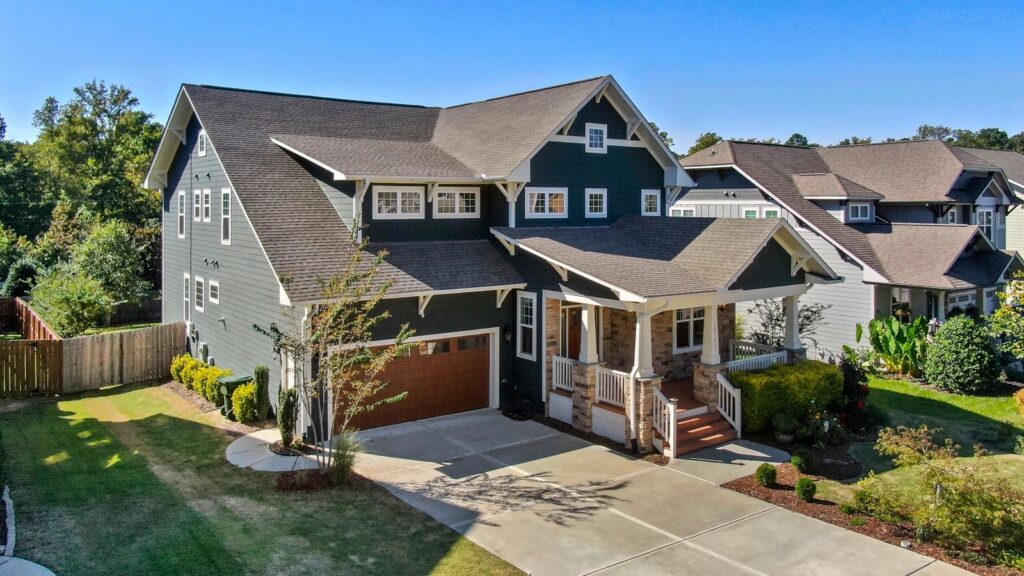
The plan’s description of the Craftsman style reads like a design brief: shallow, overhanging gable roofs; spacious, often L-shaped porches; casement and double-hung windows grouped in threes and fours; natural wood for the front doors and throughout the interior; exposed beams, rafters, and braces; cobblestone or brick chimneys. Many bungalows were built from kits or catalog plans, and the plan singles out the Airplane Bungalow, a one-story house with a small pop-up second story, as a type unique to the style.
Then there is the stone. Arroyo stone retaining walls are especially prominent in the district, and the plan calls painting them inappropriate. That rounded river rock is the closest thing Highland Park has to a signature material.
What Highland Park interiors look like
Start with the wood. Where a bungalow’s trim, doors, and built-ins are still unpainted, that finish is the most valuable thing in the room. Clean it, repair it, and plan around it. Where earlier owners painted it, decide room by room: a painted kitchen can stay painted, but a living room with a beamed ceiling and a built-in bookcase is worth the slow work of stripping.
Respect the windows. Bungalow windows come in groups, and heavy drapery turns those bands of light into walls of fabric. Simple linen panels or wood blinds that stack tight keep the rhythm visible from inside. The porch is the next room over, so furnish it like one, with real chairs, a table, and lighting.
Color follows the architecture. The preservation plan describes the Craftsman palette as earth tones with natural finishes, and interiors that echo it in moss, ochre, clay, and warm white let the woodwork lead. Furniture mixes eras without apology; a midcentury credenza sits easily under a plate rail because both traditions favor honest materials and visible joinery. Add handmade ceramics, a wool rug with some age, and a piece of art glass. Finally, light low and warm. Table lamps and sconces bring out the grain that rows of cool recessed cans flatten, the same lesson we draw in our Silver Lake interior design guide.
Where to shop York Boulevard and North Figueroa
North Figueroa, the old Pasadena Avenue, is the historic main street; the preservation plan notes that its 5700 block holds several buildings from before 1936. York Boulevard runs smaller and more independent. Every business below was confirmed operating through its own website or a current Discover Los Angeles listing in October 2026.
Sunbeam Vintage
Sunbeam Vintage, at 106 South Avenue 58, is the furniture stop. Stock runs from vintage and modern pieces for living, dining, bedroom, and office to art, lighting, and rugs, plus its own Sunbeam Exclusive line. It is open daily from 10 a.m. to 6 p.m., walk-ins welcome.
Dotter
Dotter, at 5027 York Boulevard, is a boutique whose home section covers decor, kitchenwares, kitchen linens, and candles: the small things that finish a shelf. It is open Wednesday through Sunday and closed Monday and Tuesday.
Shorthand
At 5028 York Boulevard, Shorthand sells desk accessories, notepads, and letterpress cards printed in the shop. A bungalow writing desk deserves good paper.
Judson Studios
Judson Studios is a working maker rather than a store, and the most important design address in the neighborhood. Its headquarters at 200 South Avenue 66 handles traditional stained glass fabrication and restoration. The building, designed by Train and Williams after a fire destroyed the original, went up in 1911, became Historic-Cultural Monument No. 62 in 1969, and joined the National Register in 1999. The studio describes itself as the oldest family-run stained glass company in America, now led by fifth-generation president David Judson. If your bungalow has a cracked leaded panel, this is the call to make, and the website takes registrations for a public tour.
Highland Park Bowl
For an interior to study rather than shop, book a lane at Highland Park Bowl, 5621 North Figueroa Street, which dates to 1927. The 1933 Group peeled back decades of dropped ceilings and paint, exposed the original facade and interior, refurbished the lanes, and put the objects it found on display. It is a lesson in what careful removal can recover. For a wider hunt, use our guide to vintage and midcentury furniture in Los Angeles.
Frequently asked questions
Is Highland Park a historic district?
Large parts of it are. The Highland Park-Garvanza HPOZ, which City Planning calls the largest in Los Angeles, includes approximately 4,000 structures. Check a specific address in ZIMAS to confirm.
Do I need HPOZ approval to remodel my interior?
Generally not. The preservation plan exempts interior alterations that do not change an exterior feature. Additions, window changes, landscaping, and new paint colors do require review, so confirm with the district planner first.
What style are most Highland Park homes?
The Craftsman bungalow. The preservation plan says most historically significant homes in the HPOZ are Craftsman bungalows, alongside Victorian cottages and Queen Anne, Shingle, Mission Revival, and Tudor Revival houses.
Where can I buy furniture in Highland Park?
Sunbeam Vintage at 106 South Avenue 58 carries vintage and modern furniture, lighting, and rugs, and is open daily. Dotter on York Boulevard covers decor and kitchen goods.
Can you tour a historic Highland Park interior?
Yes. The Lummis Home at 200 East Avenue 43 is open Friday through Sunday from 10 a.m. to 3 p.m., per the city’s parks department. Judson Studios takes registrations for a public tour on its website.
Related reading
- Pasadena Interior Design: The Craftsman Standard
- Los Feliz Interior Design: Living With the Masters
- Where to Buy Vintage and Midcentury Furniture in Los Angeles
Sources
- Los Angeles City Planning: Highland Park-Garvanza HPOZ
- Los Angeles City Planning: Highland Park-Garvanza HPOZ Preservation Plan (2010)
- Los Angeles City Planning: Historic District Project Review
- Los Angeles Recreation and Parks: Lummis Home and Gardens
- Wikipedia: Lummis House
- Wikipedia: Highland Park, Los Angeles
- Wikipedia: Judson Studios
- Judson Studios: About
- Sunbeam Vintage: About and Visit
- Dotter: Location and Hours
- Discover Los Angeles: The Guide to Shopping in Highland Park
- Highland Park Bowl: History and Hours